

Trek Information
-
Bus, Airlines
-
3 Star Hotel
-
Kathmandu
-
Feb - May
-
Eco-Tour
-
All meal during trek
-
English, Chinese, Spanish
-
Easy to Moderate
-
2-15
-
15
-
65
Overview
The Everest Base Camp Trek (EBC) is one of the most celebrated trekking experiences in the world, offering a remarkable blend of natural beauty, cultural immersion, and personal challenge. Set in the heart of Nepal’s Khumbu region, this journey takes you deep into the Himalayas, culminating at the base of Mount Everest (8,848.86 meters), the highest peak on Earth. Over nearly two weeks, trekkers follow in the footsteps of legendary mountaineers, passing through traditional Sherpa villages, ancient monasteries, and dramatic high-altitude landscapes that gradually unfold into some of the most awe-inspiring mountain views on the planet.
The adventure typically begins with a flight from Kathmandu to Lukla, a small mountain airstrip perched on a hillside at 2,860 meters. The flight itself is an unforgettable experience, offering panoramic views of snow-capped peaks and deep valleys before landing on one of the world’s most iconic runways. From Lukla, the trek begins with a gentle descent into the Dudh Koshi Valley, setting the tone for the journey ahead. The trail winds through lush forests, crosses suspension bridges adorned with prayer flags, and passes small settlements where trekkers get their first taste of Sherpa culture and hospitality.
As the trek progresses, the route leads to Namche Bazaar, the bustling hub of the Khumbu region. Situated at 3,440 meters, Namche is more than just a stopover; it is a vibrant mountain town filled with lodges, cafes, bakeries, and shops catering to trekkers and climbers. It also serves as a crucial acclimatization point, allowing the body to adjust to the increasing altitude. During the acclimatization day, trekkers often hike to nearby viewpoints such as the Everest View Hotel or Khumjung village, where the first glimpses of Mount Everest and neighboring peaks like Lhotse and Ama Dablam can be seen on clear days.
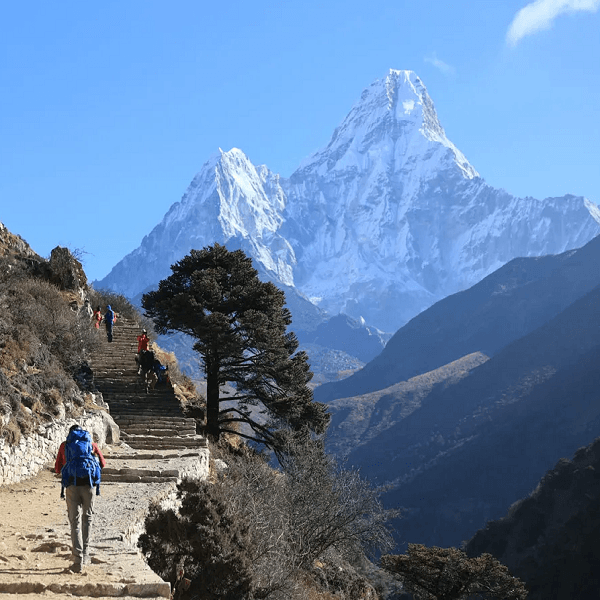
Leaving Namche, the trail contours along mountain ridges with sweeping views before descending into river valleys and climbing again toward Tengboche. This section is particularly scenic, with forests of rhododendron and pine giving way to open landscapes dominated by towering peaks. Tengboche is home to the region’s most important monastery, a spiritual center surrounded by a stunning amphitheater of mountains. The sight of Ama Dablam rising elegantly behind the monastery is one of the most iconic images of the Everest region. Visitors often have the opportunity to observe Buddhist prayer ceremonies, adding a deeply cultural and spiritual dimension to the trek.
Beyond Tengboche, the landscape begins to change noticeably as the altitude increases. Trees become sparse, replaced by alpine shrubs and eventually barren terrain. The air grows thinner, and the pace of trekking slows to accommodate the body’s need to acclimatize. Villages like Dingboche and Lobuche serve as important stops along this high-altitude route. Dingboche, located at around 4,410 meters, is another acclimatization point where trekkers take a rest day and often hike to higher elevations for better adaptation. The views here are expansive, with wide valleys and dramatic peaks stretching in every direction.
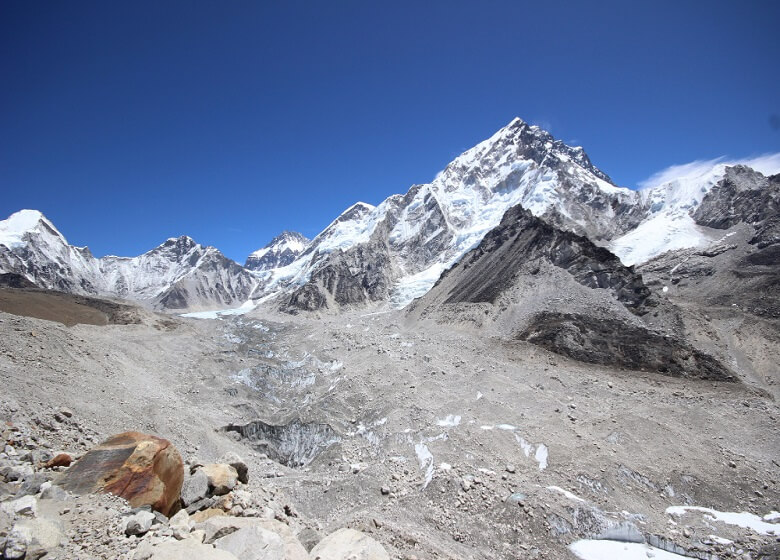
One of the defining features of the trek is the gradual transition into a rugged, glacial environment. As trekkers approach Lobuche and Gorak Shep, the terrain becomes increasingly stark and dramatic, characterized by rocky moraines, icy streams, and the immense presence of the Khumbu Glacier. Walking alongside this glacier is a surreal experience, as its shifting ice formations and deep crevasses reveal the dynamic forces shaping the Himalayas.
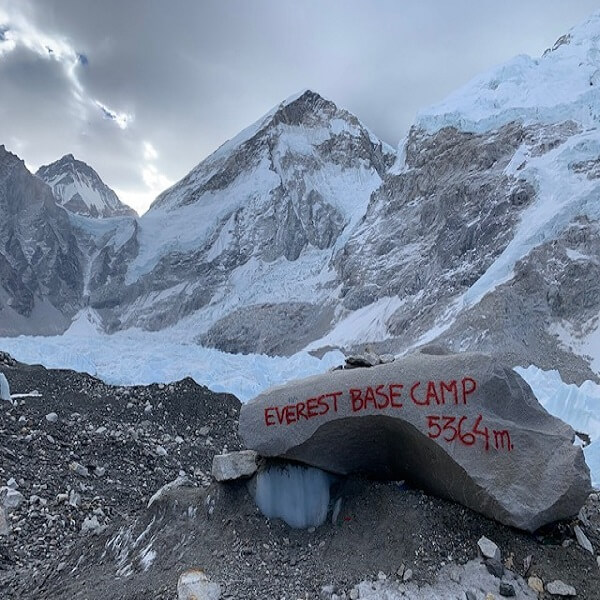
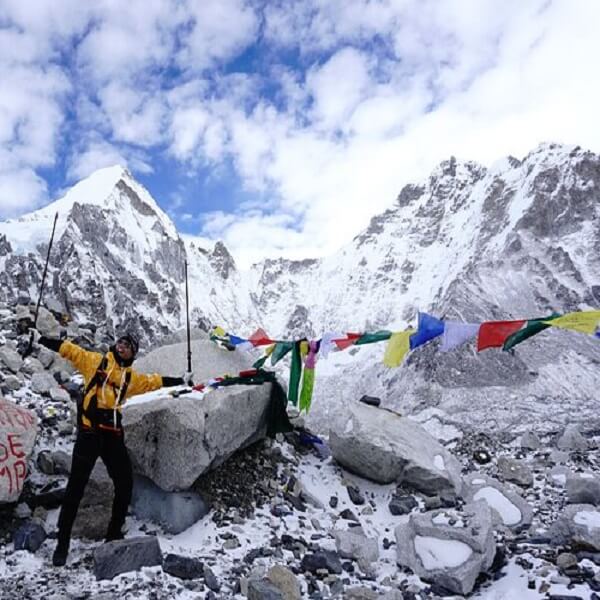
The highlight of the journey is, of course, reaching Everest Base Camp itself, situated at 5,364 meters. While the summit of Everest is not visible from base camp, the sense of achievement and the surrounding environment make it an unforgettable destination. During the climbing season, trekkers may see colorful expedition tents scattered across the glacier, adding to the sense of being at the gateway to one of the greatest challenges in mountaineering. Standing at base camp, surrounded by towering peaks and the formidable Khumbu Icefall, offers a profound appreciation for the scale and power of the Himalayas.
Highlights
- Scenic Flight to Lukla
- Trek Through Sagarmatha National Park
- Sherpa Culture & Villages
- Namche Bazaar (Gateway to Everest)
- Tengboche Monastery
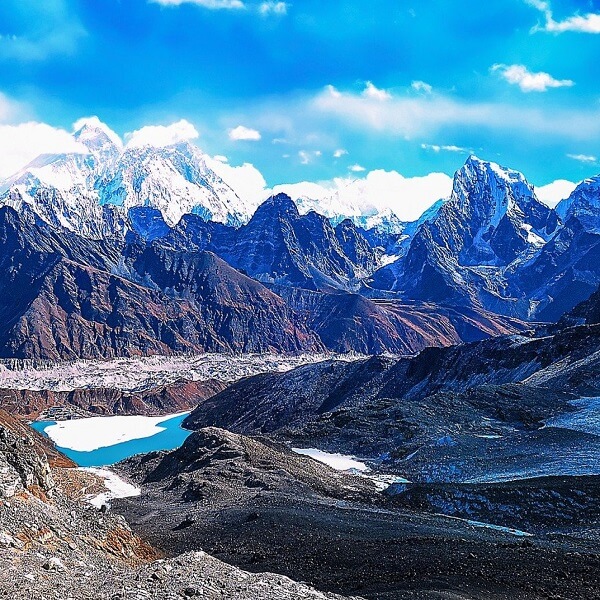
- Panoramic Himalayan Views
- Everest Base Camp (5,364 m)
- Kala Patthar (5,545 m) – Best Viewpoint
- Khumbu Glacier & Icefall
- Gradual Acclimatization
- Moderate to Challenging Trekking Experience
- Global Trekking Community


