

Trip Info
-
Bus, Airline
-
3 Star hotel
-
Kathmandu
-
Feb-May
-
Eco-tour
-
All meal during trek
-
English, Spanish, Chinese
-
Easy to moderate
-
2-15
-
15
-
65
The Kanchenjunga Circuit Trek is one of Nepal’s most remote, challenging, and rewarding trekking adventures, offering a complete journey around Mount Kanchenjunga, the third-highest peak in the world at 8,586 meters. This trek combines both the North and South Base Camps into a single extended route, providing trekkers with a comprehensive exploration of the Kanchenjunga region. Known for its untouched landscapes, rich biodiversity, and deep cultural traditions, the Kanchenjunga Circuit Trek stands out as a true wilderness experience far from the crowded trails of Everest and Annapurna.
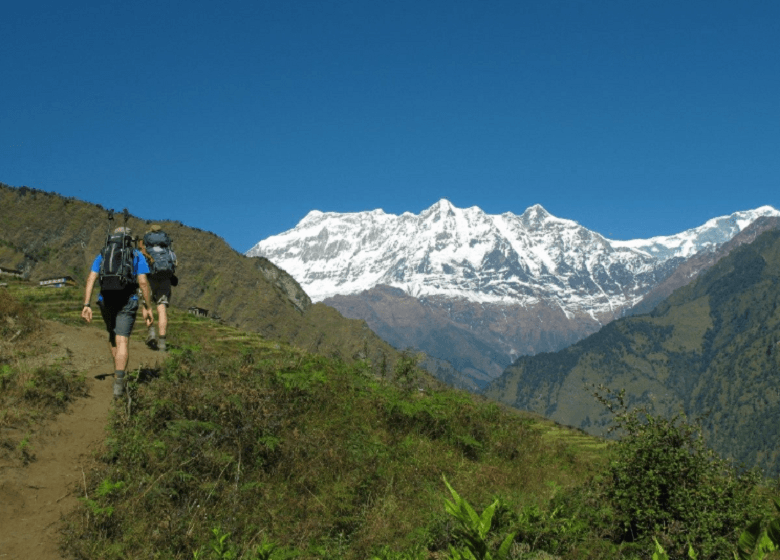
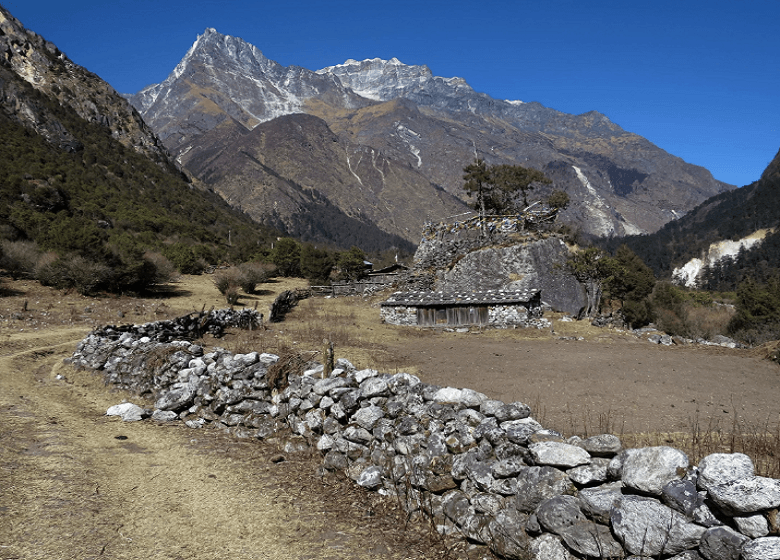
The journey begins with a flight from Kathmandu to Bhadrapur in eastern Nepal, followed by a long but scenic drive to Taplejung, the main gateway to the Kanchenjunga region. From here, the trek gradually unfolds through diverse landscapes, starting with lush subtropical forests, terraced fields, and traditional villages. The lower sections are warm and green, with rivers, waterfalls, and dense vegetation creating a vibrant environment. As trekkers ascend, the terrain transitions into alpine forests, glacial valleys, and eventually high-altitude wilderness.
One of the defining features of the Kanchenjunga Circuit Trek is its incredible diversity. The route passes through the Kanchenjunga Conservation Area, a protected region rich in plant and animal life. Trekkers may walk through forests of rhododendron, oak, and bamboo, especially beautiful during the spring when flowers are in bloom. Wildlife in the region includes red pandas, Himalayan black bears, musk deer, and the elusive snow leopard. Although sightings are rare, the presence of such species highlights the ecological importance of the area.
Culturally, the trek offers a fascinating journey through different communities and traditions. The lower regions are inhabited by Rai and Limbu communities, whose lifestyles are rooted in agriculture and local customs. As the trail climbs higher, Tibetan Buddhist influence becomes more visible, particularly in villages like Ghunsa. Here, trekkers encounter monasteries, prayer flags, and carved stone walls that reflect the spiritual connection of the people to the mountains. The cultural diversity adds depth to the trek, making it not only a physical journey but also a cultural exploration.
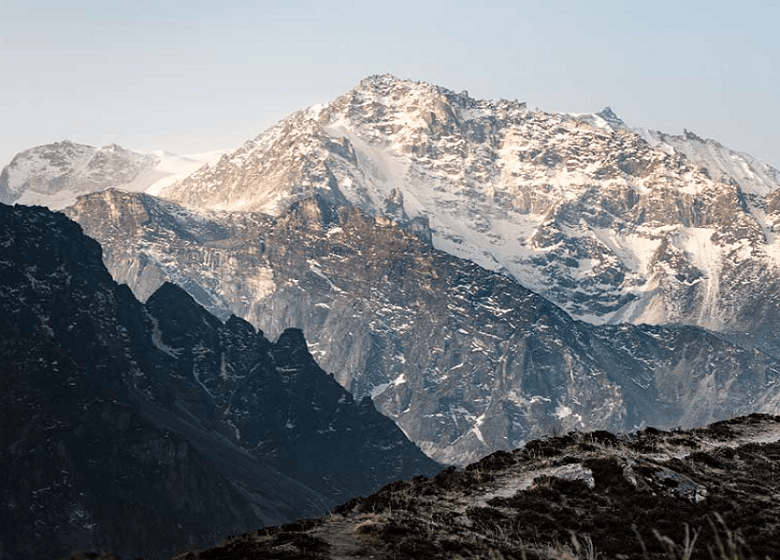
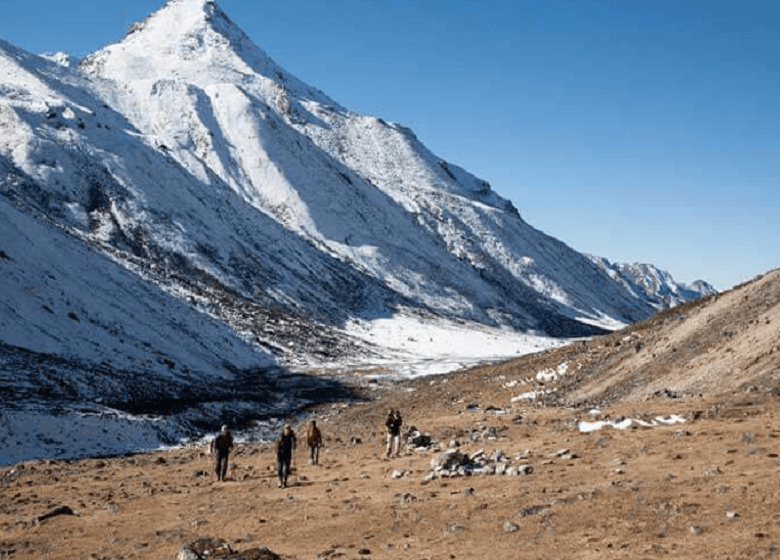
The circuit route is unique because it covers both sides of Kanchenjunga, each offering a distinct experience. The northern section follows the Ghunsa Valley, leading to the North Base Camp at Pangpema, located at around 5,140 meters. This part of the trek features wide glacial valleys, dramatic mountain views, and a sense of vast openness. Villages such as Ghunsa, Kambachen, and Lhonak serve as key stops for acclimatization and rest. The highlight here is the close-up view of Kanchenjunga’s north face, along with surrounding peaks like Jannu and Chang Himal.
The southern section of the circuit takes trekkers to Oktang, the South Base Camp of Kanchenjunga, at approximately 4,730 meters. This route follows the Simbuwa Khola valley, offering a more enclosed and rugged landscape compared to the northern side. Dense forests, steep trails, and cascading waterfalls define the lower sections, while the upper regions open into glacial terrain with impressive views of Kanchenjunga’s southern face and nearby peaks such as Yalung Kang and Kabru. The contrast between the two sides of the mountain is one of the most rewarding aspects of the circuit.
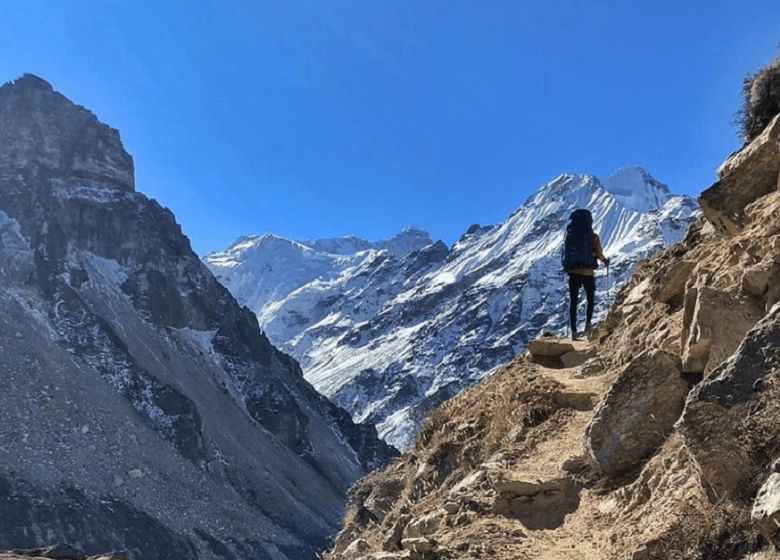
Connecting the north and south sections is the challenging Sele La Pass, which rises to over 4,200 meters. Crossing this high pass is a major highlight of the trek, offering panoramic views of snow-covered peaks and remote valleys. The pass requires good physical fitness and favorable weather conditions, but it provides a true sense of adventure and accomplishment. The crossing also marks the transition between two very different landscapes, adding to the overall diversity of the journey.
The Kanchenjunga Circuit Trek is considered strenuous due to its long duration, remote location, and high altitude. The trek typically takes around 20 to 26 days to complete, depending on the route and pace. Trails can be steep and demanding, with long days of walking and limited facilities in certain sections. Proper acclimatization is essential, and most itineraries include rest days in key locations such as Ghunsa and Kambachen to reduce the risk of altitude sickness.
Accommodation along the route is primarily in tea houses, though they are more basic compared to those in popular trekking regions. In some remote areas, especially near the passes or less-visited trails, camping may be required. Rooms are simple, and services such as electricity, hot showers, and internet access are limited. Meals are generally hearty and designed to sustain trekkers, with common options including rice, lentils, vegetables, noodles, soups, and bread. The hospitality of the local people adds warmth and comfort to the journey despite the simplicity.
One of the most appealing aspects of the Kanchenjunga Circuit Trek is its sense of isolation. The region sees relatively few trekkers, allowing for quiet trails and an immersive experience in nature. This remoteness also means that careful planning is essential. The area is designated as a restricted region, requiring special permits and the presence of a licensed guide. Trekkers typically travel in small groups with support from guides and porters, ensuring safety and logistical support throughout the journey.
The best time to undertake the Kanchenjunga Circuit Trek is during the spring (March to May) and autumn (September to November) seasons. Spring brings blooming forests and mild temperatures, while autumn offers clear skies and excellent mountain visibility. Winter trekking is possible but challenging due to snow and cold conditions, especially at higher elevations. The monsoon season is less favorable due to heavy rainfall, particularly in the lower sections of the trail.
Beyond the physical challenge and scenic beauty, the Kanchenjunga Circuit Trek offers a deeply rewarding experience that connects trekkers with nature and culture in a meaningful way. The gradual progression through diverse landscapes, the interaction with local communities, and the sense of accomplishment at reaching both base camps create a journey that is both adventurous and enriching.
Trip Highlights
- Complete a full circuit around Mount Kanchenjunga, the third-highest peak in the world
- Visit both North Base Camp (Pangpema – 5,140 m) and South Base Camp (Oktang – 4,730 m)
- Cross the scenic and challenging Sele La Pass with panoramic Himalayan views
- Experience one of Nepal’s most remote and least crowded trekking regions
- Explore the pristine Kanchenjunga Conservation Area rich in wildlife and flora
- Walk through diverse landscapes from lush forests to glaciers and high-altitude terrain
- Enjoy close-up views of major peaks including Kanchenjunga, Jannu, Kabru, and Yalung Kang
- Visit traditional villages like Ghunsa and Yamphudin with unique local cultures
- Witness dramatic glaciers, moraines, waterfalls, and deep river valleys
- Experience an authentic wilderness adventure with minimal commercialization


