

Trip Info
-
Bus, Airline
-
3 Star hotel
-
Kathmandu
-
Feb-May
-
Eco-tour
-
All meal during trek
-
English, Spanish, Chinese
-
Easy to moderate
-
2-15
-
15
-
65
The Dolpo to Mustang Traverse Trek is one of the most remarkable journeys through Nepal, offering a rare blend of rugged high-altitude landscapes, deep cultural immersion, and an unparalleled sense of remoteness. Stretching across the western Himalayas, this trek connects two of Nepal’s most fascinating regions: the mystical upper Dolpo region and the arid, culturally rich kingdom of Mustang. It is a trek that appeals to adventurers seeking solitude, history, and a glimpse of ancient Tibetan Buddhist culture in its most authentic form.
The adventure begins in the isolated upper Dolpo region, a place that has preserved its traditional lifestyle and Tibetan-influenced culture for centuries. Accessing Dolpo itself requires careful planning, typically involving a combination of flights and rugged road travel to reach the starting point. From the moment you enter this region, the landscape captures attention: deep river valleys carved by glacial streams, expansive alpine meadows, and high passes that frame distant snow-capped peaks. Unlike the more popular trekking routes in Nepal, the trails here are quiet and sparsely populated, providing a sense of genuine wilderness and solitude.
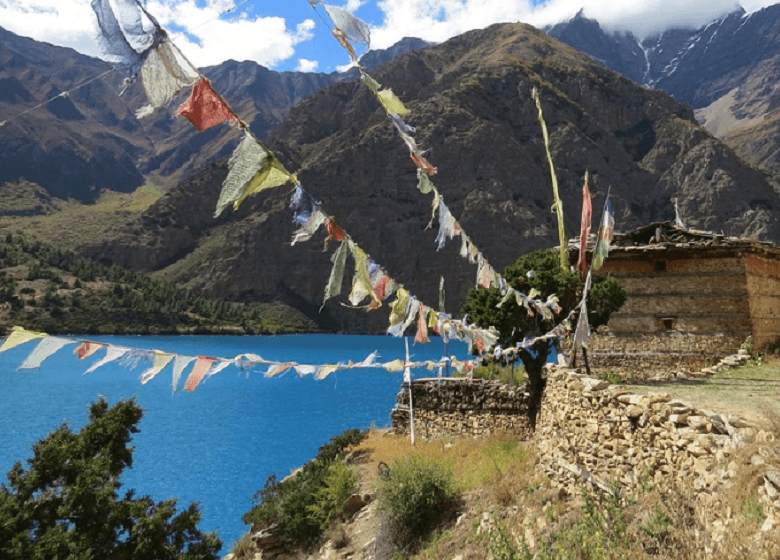
Dolpo is not just about landscapes; it is also a living museum of Tibetan culture. Villages are made up of stone and mud houses with flat roofs, prayer flags fluttering in the wind, and mani walls lining paths. Monasteries, some dating back hundreds of years, are focal points of spiritual and social life. The people, mostly of Tibetan descent, are known for their warm hospitality. Along the trek, travelers have the opportunity to witness traditional farming practices, yak herding, and unique festivals if timed correctly. Visiting these villages provides insight into a way of life that has remained largely unchanged for centuries.
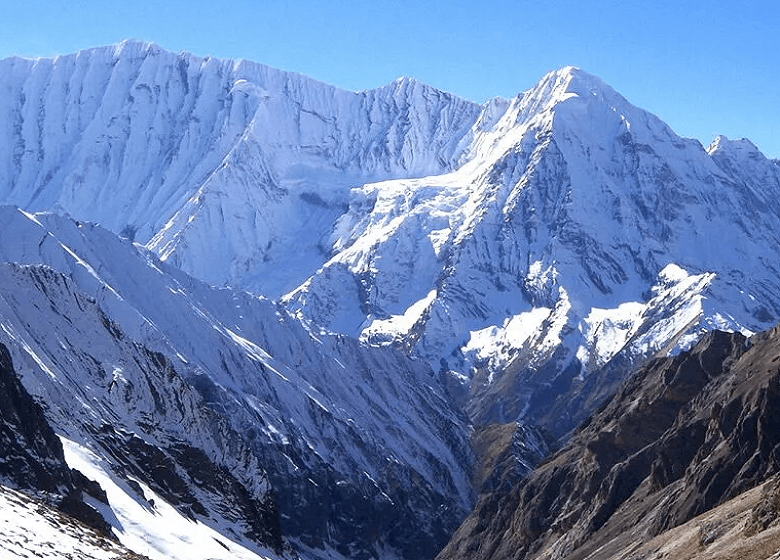
The trek itself is physically demanding. Dolpo is a high-altitude region with elevations often exceeding 4,000 meters, and the terrain can be rugged. Trails wind through narrow valleys, across glacial rivers, and over high passes, offering dramatic views at every turn. One of the highlights is the Kanjiroba Himal range, where peaks rise sharply from the valleys, creating breathtaking panoramas. The remote nature of this region means that trekkers must be self-sufficient and prepared for long days on the trail, often without the amenities available in more frequented trekking areas.
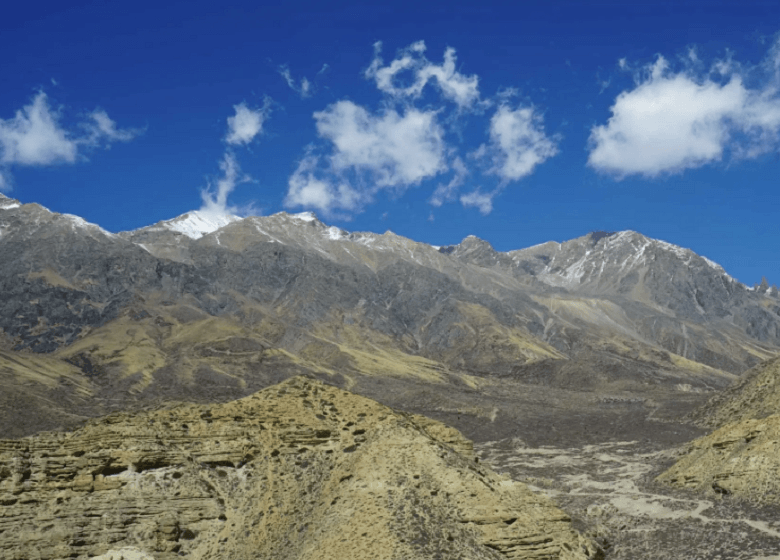
As the journey progresses, the trek begins its descent toward Mustang. This transition marks a dramatic change in landscape and climate. Mustang, often called the “Last Forbidden Kingdom,” sits in a rain-shadow area on the northern slopes of the Himalayas, which gives it a stark, almost lunar appearance. Red cliffs, deep gorges, and desert-like plateaus dominate the scenery, contrasting sharply with the lush valleys and alpine zones of Dolpo. The trail often follows ancient trade routes that connected Tibet with the lowlands of Nepal, and the remnants of these routes are still visible in the stone bridges, caravan trails, and old settlements along the way.
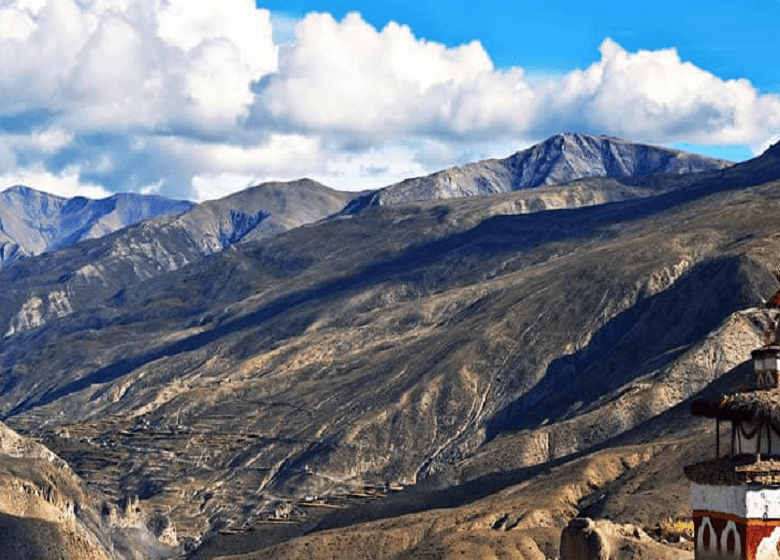
Mustang is renowned for its preserved Tibetan culture, which remains vibrant and accessible. The villages are fortified, and narrow lanes wind past ancient stone houses decorated with intricate wood carvings. Monasteries dot the landscape, perched dramatically on cliff faces or nestled in valleys, many of them centuries old. The region is dotted with caves that were once used by monks for meditation, some of which are still active. The people of Mustang maintain traditional dress, customs, and festivals, creating a living connection to the past. This cultural richness is amplified by the dramatic natural backdrop, where golden cliffs and wide-open desert valleys meet blue skies and distant Himalayan peaks.
One of the most compelling aspects of the Dolpo to Mustang Traverse is its sense of isolation. Unlike the Everest or Annapurna regions, the trek sees very few other travelers. This allows for a deeper connection to the landscape and local communities. Camped beneath towering cliffs or high on windswept passes, trekkers can experience the vastness of the Himalayas in a way that is hard to find on more crowded routes. Nights are often clear, and the sky is filled with stars, creating moments of quiet reflection and awe.
The trek also involves crossing several high passes, which provide panoramic views of both Dolpo and Mustang. These passes are challenging, requiring acclimatization and careful planning, but the effort is rewarded with vistas that encompass rugged mountain ranges, terraced valleys, and the arid beauty of Mustang. Along the way, trekkers must be prepared for variable weather, ranging from warm sunshine in the valleys to cold winds and possible snow at higher elevations.
In addition to its natural and cultural wonders, the trek offers insight into Nepal’s geological diversity. The landscape transitions from glacial valleys and alpine meadows in Dolpo to dry riverbeds, canyon-like formations, and sedimentary cliffs in Mustang. This variation creates endless opportunities for photography and exploration, with each day bringing new scenery and perspectives. Wildlife can also be spotted, including Himalayan blue sheep, snow leopards in remote areas, and various bird species adapted to high-altitude environments.
The journey from Dolpo to Mustang is not only a physical challenge but also a spiritual and emotional one. The solitude of the trail encourages reflection, and encounters with local villagers often leave a lasting impression. Meals are often simple, cooked over wood or dung fires in small lodges or teahouses, and the lack of modern distractions allows trekkers to immerse themselves fully in the moment. Traditional music, rituals, and ceremonies can be observed along the way, offering a glimpse into centuries-old practices.
The trek usually concludes in the town of Jomsom or Lo Manthang in Mustang, depending on the chosen route. Lo Manthang, the walled capital of the former kingdom, is particularly striking with its narrow streets, whitewashed walls, and a royal palace at its center. Visiting this town provides a fitting end to the traverse, encapsulating the cultural richness and historical significance of the region. From here, travelers can access motorable roads, fly back to Kathmandu, or continue exploring Mustang’s lower valleys.
Trip Highlights
- Remote Wilderness of Upper Dolpo
- Kanjiroba Himal Range
- Traditional Tibetan Culture
- High Mountain Passes
- Lo Manthang, the Walled City
- Unique Mustang Landscapes
- Ancient Trade Routes
- Cultural Festivals and Rituals
- Star-Filled Himalayan Nights
- Wildlife and Nature


