

Trip Info
-
Bus, Airline
-
3 Star hotel
-
Kathmandu
-
Feb-May
-
Eco-tour
-
All meal during trek
-
English, Spanish, Chinese
-
Easy to moderate
-
2-15
-
15
-
65
The Upper Mustang Trek is one of Nepal’s most unique and culturally rich trekking experiences, offering travelers a rare glimpse into a region that feels suspended in time. Nestled in the rain-shadowed region of the Himalayas, north of the Annapurna and Dhaulagiri ranges, Upper Mustang is often referred to as the “Last Forbidden Kingdom” of Nepal. Its striking landscape, vibrant Tibetan-influenced culture, and arid desert-like terrain set it apart from the lush green valleys more commonly associated with the Himalayan region.
The journey to Upper Mustang typically begins in the town of Pokhara, a picturesque city at the foot of the Annapurna range. From here, travelers usually take a short domestic flight to Jomsom, the district headquarters of Mustang. Jomsom sits at an altitude of approximately 2,700 meters and serves as the gateway to Upper Mustang. The flight itself is an experience, offering breathtaking views of the Annapurna and Dhaulagiri ranges, with towering snow-capped peaks punctuating the horizon. Alternatively, for those seeking a longer approach, overland journeys via motorable roads from Pokhara or Beni are possible, though they can be challenging due to rugged terrain and unpredictable weather conditions.
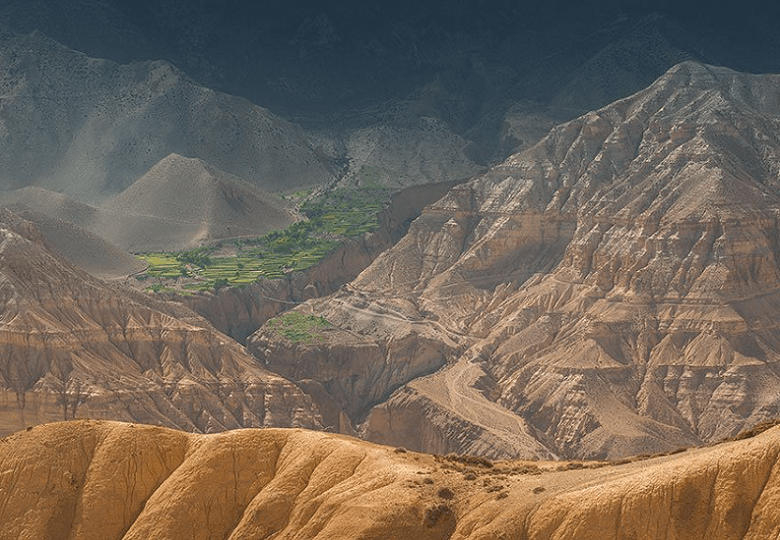
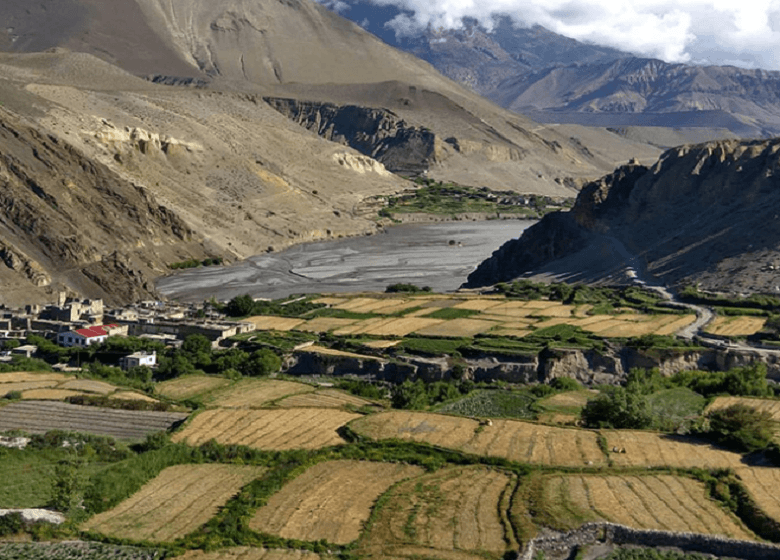
Once in Jomsom, trekkers begin the ascent into the Mustang region, moving gradually higher into the arid Trans-Himalayan landscape. Unlike other parts of Nepal, Upper Mustang lies in the rain shadow of the Himalayas, which means it receives very little rainfall. The terrain is characterized by barren cliffs, deep gorges, and expansive red and orange rock formations, giving it an almost Martian appearance. The starkness of the landscape is contrasted by small villages that cling to the sides of valleys and ridges, with traditional flat-roofed stone houses and prayer flags fluttering in the wind. These villages provide a sense of scale and human presence against the dramatic backdrop of the high mountains.
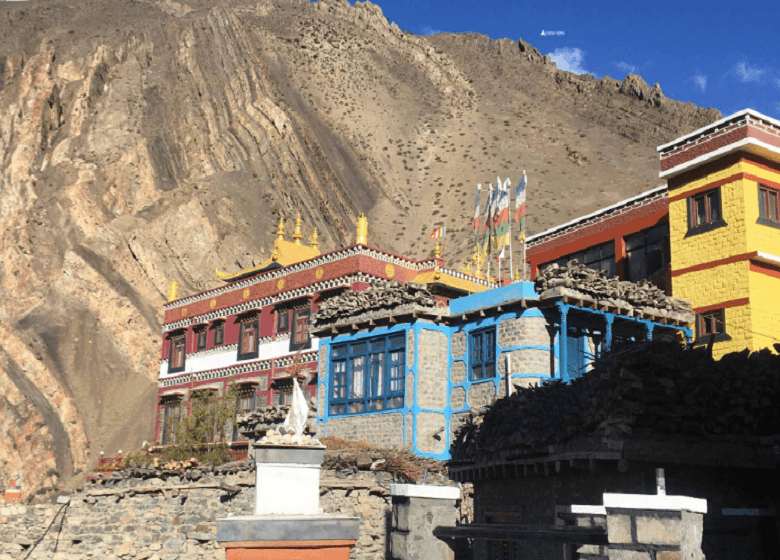
One of the most fascinating aspects of the Upper Mustang Trek is the cultural heritage. Mustang was a restricted region until 1992, which helped preserve its Tibetan Buddhist culture almost intact. Travelers encounter monasteries, chortens, and mani walls at nearly every turn, along with intricately painted caves and murals that date back centuries. Lo Manthang, the capital of Upper Mustang, is particularly notable for its walled city, which is reminiscent of a Tibetan fortress. Walking through Lo Manthang’s narrow lanes offers a unique opportunity to observe traditional lifestyle, local markets, and religious ceremonies that remain largely untouched by modern tourism. The town is home to several important monasteries, including Chode Gonpa, Jampa Gonpa, and Thubchen Gompa, each with its own rich history and spiritual significance.
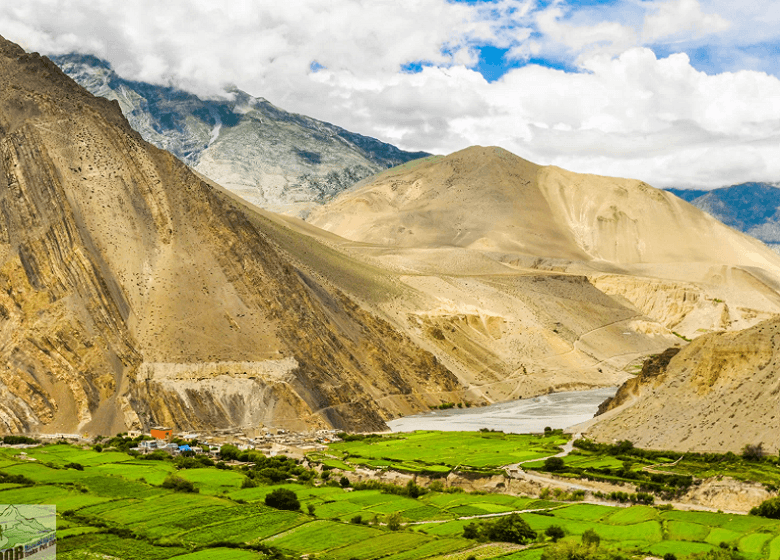
Trekking in Upper Mustang also means encountering a variety of landscapes that are unusual for Nepal. Early stages of the trek often follow the Kali Gandaki River, a deep gorge that separates the Dhaulagiri and Annapurna ranges. The river valley is dotted with quaint villages such as Kagbeni and Chele, where trekkers can rest, refuel, and acclimatize. As the journey progresses, the terrain becomes increasingly arid and desert-like, with windswept cliffs and sand-colored canyons dominating the horizon. These conditions require proper acclimatization and preparation, as the trek reaches altitudes of over 3,800 meters at points such as Ghami and Chhusang, and eventually surpasses 4,000 meters in Lo Manthang. Despite the arid environment, the region surprises visitors with its small patches of fertile land, barley fields, and apple orchards, which reflect the resilience and adaptability of the local communities.
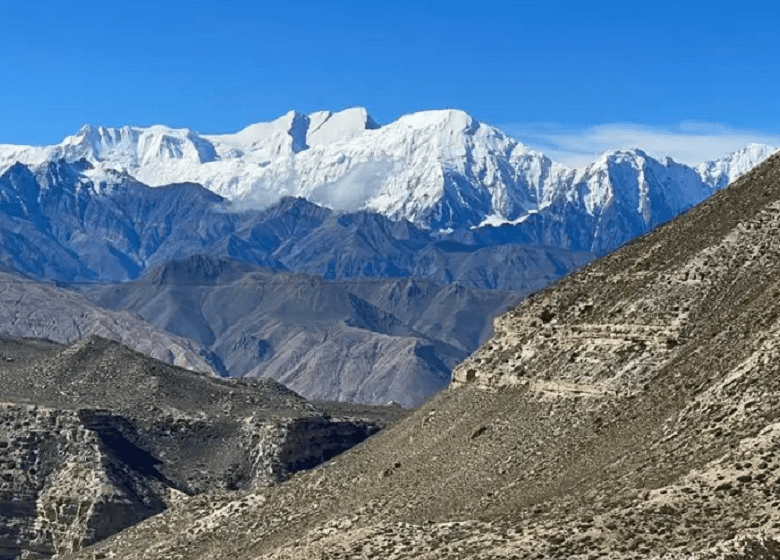
Upper Mustang is also known for its network of ancient caves carved into cliffs. Some of these caves were used as meditation chambers by monks, while others served as burial sites or storage spaces. Exploring these caves offers a tangible connection to the region’s history and spiritual traditions. The trek also provides several vantage points that afford panoramic views of the surrounding mountains, including Annapurna II, Nilgiri, and the Dhaulagiri range, framed by the stark red cliffs and canyons of Mustang. Sunrise and sunset in Upper Mustang are particularly memorable, as the sun casts warm golden hues over the barren landscape, highlighting the intricate textures of the cliffs and the vibrant colors of the villages.
The people of Upper Mustang are equally captivating. The local population is primarily of Tibetan descent, and their customs, dress, and language reflect centuries of close cultural ties with Tibet. Visitors often witness traditional festivals, such as Tiji, a three-day event celebrating the victory of good over evil, which involves masked dances, music, and community gatherings. Daily life in Mustang is closely tied to the harsh environment, with agriculture, animal husbandry, and trade forming the backbone of the local economy. Trekkers will notice the importance of prayer in everyday life, with many villagers stopping to spin prayer wheels or offer incense at small shrines along the trail.
Logistics for the Upper Mustang Trek require careful planning. A special permit is required to enter the restricted area, which ensures that tourism remains controlled and sustainable. Trekkers typically hire local guides and porters, both to support the local economy and to enhance the trekking experience. Lodging in Upper Mustang ranges from simple tea houses to modest guesthouses, with basic facilities but warm hospitality. Meals often consist of a combination of Tibetan, Nepali, and local dishes, including thukpa, momo, and tsampa, providing both nourishment and a taste of the regional cuisine.
The trekking route can vary depending on the duration and objectives of the journey, but a typical itinerary spans around 10 to 14 days, covering approximately 120–160 kilometers round trip. The trek is considered moderate to challenging due to the altitude, arid climate, and rugged terrain. However, the well-marked trails, combined with the hospitality of the locals and the availability of tea houses, make it accessible to trekkers with reasonable fitness levels and proper acclimatization. The trail is a mix of narrow cliff-side paths, river crossings, and rocky trails, demanding attention but offering constant rewards in the form of scenery and cultural encounters.
Beyond the natural beauty and cultural heritage, the Upper Mustang Trek offers an unparalleled sense of remoteness. Unlike more frequented trekking regions in Nepal, visitors often experience long stretches of solitude, with only a few other trekkers on the trail. This quietness enhances the feeling of traveling back in time, providing space for reflection and immersion in the rhythm of the mountains. The combination of stark landscapes, historical depth, and spiritual presence creates a trek that is not only physically engaging but also mentally and emotionally enriching.
Trip Highlights
- Explore the “Last Forbidden Kingdom” of Nepal, a region that remained closed to outsiders until 1992
- Experience a unique desert-like Himalayan landscape with dramatic cliffs, canyons, and red rock formations
- Visit the ancient walled city of Lo Manthang, rich in history, culture, and traditional architecture
- Immerse yourself in preserved Tibetan Buddhist culture, with monasteries, chortens, and prayer flags along the trail
- Trek through the Kali Gandaki Gorge, one of the deepest gorges in the world
- Discover centuries-old cave dwellings carved into cliffs, once used for meditation and burial
- Enjoy stunning views of Annapurna, Dhaulagiri, and Nilgiri mountain ranges throughout the journey
- Witness traditional lifestyle and hospitality of Mustang’s Tibetan-influenced communities
- Attend vibrant cultural festivals like Tiji (seasonal), featuring masked dances and rituals
- Experience a remote and less-crowded trekking route compared to other popular regions in Nepal


