

Trip Info
-
Bus, Airline
-
3 Star hotel
-
Kathmandu
-
Feb-May
-
Eco-tour
-
All meal during trek
-
English, Spanish, Chinese
-
Easy to moderate
-
2-15
-
15
-
65
The Makalu to Everest via Sherpani Col Trek is one of the most challenging and rewarding trekking routes in the Himalayas. Combining the raw wilderness of the Makalu region with the iconic landscapes of the Everest region, this trek offers adventurers an unparalleled experience, blending high-altitude mountaineering, diverse cultures, and breathtaking scenery. Spanning remote valleys, glacial passes, and towering peaks, this trek is ideal for experienced trekkers looking for a less-traveled path that connects two of Nepal’s most spectacular mountainous regions.
The journey begins in the eastern part of Nepal, near the Makalu Barun National Park, home to the world’s fifth-highest peak, Makalu. This area is renowned for its pristine landscapes, lush forests, and rich biodiversity. Trekkers start from the small town of Tumlingtar, which is accessible by a short domestic flight from Kathmandu or Biratnagar. From here, the route winds through the lower Arun Valley, crossing subtropical forests, terraced farmland, and small Sherpa and Rai villages. The initial days of trekking offer a gentle introduction to the Himalayan terrain while providing stunning views of surrounding peaks like Chamlang, Baruntse, and Makalu itself.
As the trek progresses, the trail ascends gradually through dense rhododendron and bamboo forests. Trekkers often encounter rare Himalayan wildlife, including red pandas, musk deer, and various species of pheasants. Villages along the way, such as Num and Tashigaon, give insight into the local Sherpa and Rai cultures. Hospitality is warm and genuine, with tea houses providing simple but hearty meals, often accompanied by views of soaring peaks. These villages serve as important acclimatization points before the trek begins to tackle higher altitudes and more rugged terrain.
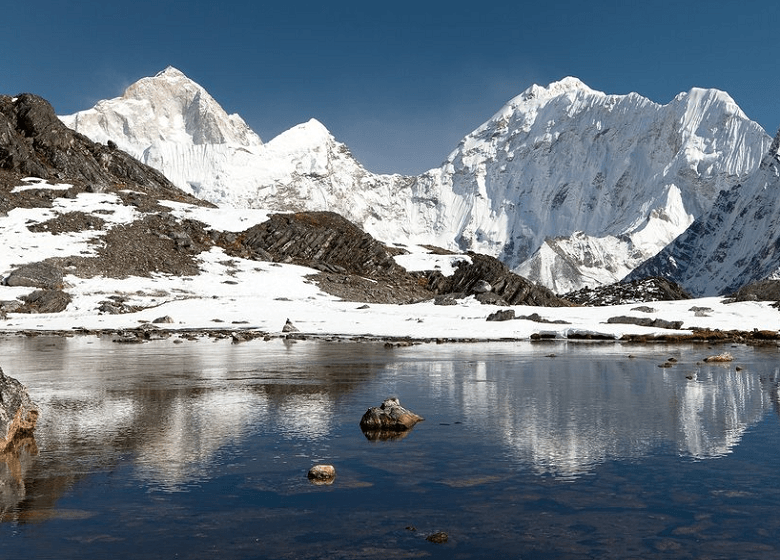
The approach to Sherpani Col, a remote high-altitude pass, represents the most technically demanding section of the trek. The pass itself, sitting at approximately 5,400 meters, links the Makalu region to the Khumbu region, creating a natural corridor between two of Nepal’s most famous trekking zones. The trail to Sherpani Col requires experience in navigating high-altitude terrain, as trekkers traverse rocky ridges, glaciers, and steep snowfields. The scenery is dramatic, with massive icefalls, glacial moraines, and jagged peaks dominating the horizon. Proper acclimatization and preparation are crucial, as altitude sickness can be a serious risk in this section.
Descending from Sherpani Col, trekkers enter the Khumbu region, home to the legendary Everest Base Camp trail. The shift from the remote and rugged Makalu region to the more frequented Khumbu area offers a remarkable contrast. Lush alpine meadows gradually give way to more barren, rocky landscapes, with glaciers and towering peaks such as Lhotse, Ama Dablam, and, of course, Mount Everest, coming into view. This part of the trek highlights the vastness of the Himalayas and the diversity of Nepal’s terrain, showcasing everything from deep river gorges to massive snowfields.
The villages in the Khumbu region, including Pangboche, Namche Bazaar, and Dingboche, provide opportunities for cultural immersion and acclimatization. Namche Bazaar, in particular, is the commercial hub of the Khumbu, bustling with trekkers, mountaineers, and traders. The Sherpa culture here is deeply tied to mountaineering traditions, and visitors can explore monasteries, local markets, and museums that document the history of Everest expeditions. The hospitality in these villages, combined with stunning panoramic views, makes for memorable rest days that balance the physical demands of the trek.
Continuing north, the trek passes through high alpine terrain, including the challenging Amphu Labtsa Pass, depending on the chosen route variations. Trekkers are rewarded with spectacular views of glaciers, crevasses, and the iconic peaks of the Everest massif. As the trail descends toward the Everest Base Camp area, the environment becomes stark yet mesmerizing, with windswept valleys and towering ice walls creating an almost otherworldly atmosphere.
The culmination of the trek is reaching Everest Base Camp, situated at approximately 5,364 meters. Standing at the foot of the world’s highest mountain, trekkers are rewarded with awe-inspiring views of Everest, Lhotse, Nuptse, and Pumori. The experience of witnessing climbers preparing for ascents, coupled with the vastness of the Khumbu Glacier, leaves a lasting impression. Many trekkers also take the opportunity to visit the nearby Kala Patthar, a viewpoint offering arguably the best close-up view of Everest without requiring technical climbing skills.
Aside from the physical and visual rewards, the trek offers deep immersion into the Sherpa culture. Monasteries, prayer flags, and mani stones are ubiquitous throughout the region, reflecting the spiritual essence of the Himalayas. Seasonal festivals and local rituals can sometimes be observed, providing insight into the unique blend of Tibetan Buddhism and Himalayan traditions that shape life in these high-altitude communities.
From a logistical standpoint, the trek is challenging and demands careful planning. It typically requires 18 to 25 days, depending on acclimatization schedules, route variations, and weather conditions. The best seasons to attempt the trek are pre-monsoon (March to May) and post-monsoon (late September to November), when skies are clear and temperatures are moderate. Proper gear for extreme cold, snow, and potential altitude challenges is essential. Guides and porters are strongly recommended, not only for navigation and safety but also for enriching the journey with cultural insights and local knowledge.
This trek also appeals to those interested in photography and natural history. The Makalu Barun National Park and the Khumbu region are home to rare flora and fauna. Trekkers encounter pristine forests, alpine meadows, and a variety of endemic plant species, from colorful rhododendrons to medicinal herbs. Birdwatchers may spot monal pheasants, Himalayan griffons, and other high-altitude species. The ever-changing Himalayan light and the dramatic mountain vistas provide endless opportunities for capturing the perfect shot.
The combination of Makalu’s remote wilderness and the grandeur of the Everest region makes the Sherpani Col trek a truly unique Himalayan experience. Unlike standard Everest treks, this route offers solitude and immersion into less-traveled areas, challenging both physical endurance and mental resilience. The rewards are immense: a sense of accomplishment, unforgettable scenery, and the opportunity to witness two of the most spectacular regions of Nepal in one expedition.
Trip Highlights
- Trek through Makalu Barun National Park with pristine forests and alpine meadows
- Cross the high-altitude Sherpani Col Pass (≈5,400 m)
- Panoramic views of Makalu, Chamlang, Baruntse, Lhotse, Ama Dablam, and Everest
- Visit remote Sherpa and Rai villages like Num, Tashigaon, and Pangboche
- Reach Everest Base Camp surrounded by glaciers and towering peaks
- Ascend Kala Patthar for a close-up view of Mount Everest
- Traverse diverse landscapes from subtropical forests to glacial valleys
- Explore monasteries, prayer flags, and local Tibetan Buddhist traditions
- Spot rare Himalayan wildlife including red pandas, musk deer, and monal pheasants
- Experience a less-traveled, challenging route with solitude and adventure


