

Trip Info
-
Bus, Airline
-
3 Star Hotel
-
Kathmandu
-
Feb-May
-
Eco-Tour
-
All meals during trek
-
English, Chinese, Spanish
-
Easy to moderate
-
2-15
-
15
-
65
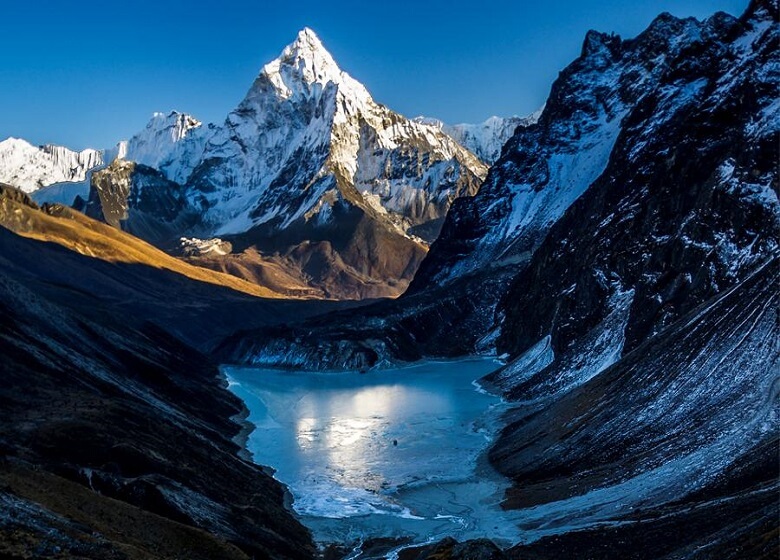
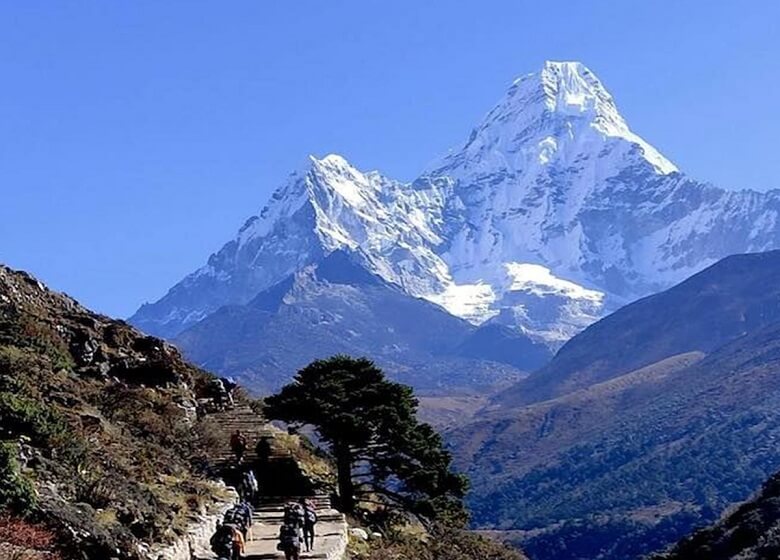
The Ama Dablam Base Camp Trek is one of the most visually rewarding journeys in the Everest region, offering a quieter and more focused alternative to the classic Everest Base Camp route. While it shares the early stages with the main trail, it soon branches off toward the base of Ama Dablam, a mountain widely regarded as one of the most beautiful in the world. With its sharp ridges and symmetrical form, Ama Dablam dominates the skyline throughout much of the trek, creating a constant sense of awe.
The journey typically begins with a flight from Kathmandu to Lukla, a small mountain airstrip that serves as the gateway to the Khumbu region. From here, the trail follows the Dudh Koshi River through villages like Phakding, gradually introducing trekkers to the rhythms of the Himalayas. Suspension bridges, prayer wheels, and mani walls line the path, offering both scenic and cultural highlights from the very beginning.
As the trail climbs toward Namche Bazaar, the landscape begins to open up. Namche is the main trading hub of the region and a key acclimatization stop. Built into the side of a mountain, it offers sweeping views of the surrounding peaks and a lively atmosphere with bakeries, cafes, and local markets. Spending an extra day here allows trekkers to adjust to the altitude while exploring nearby viewpoints such as the Everest View Hotel or the village of Khumjung.
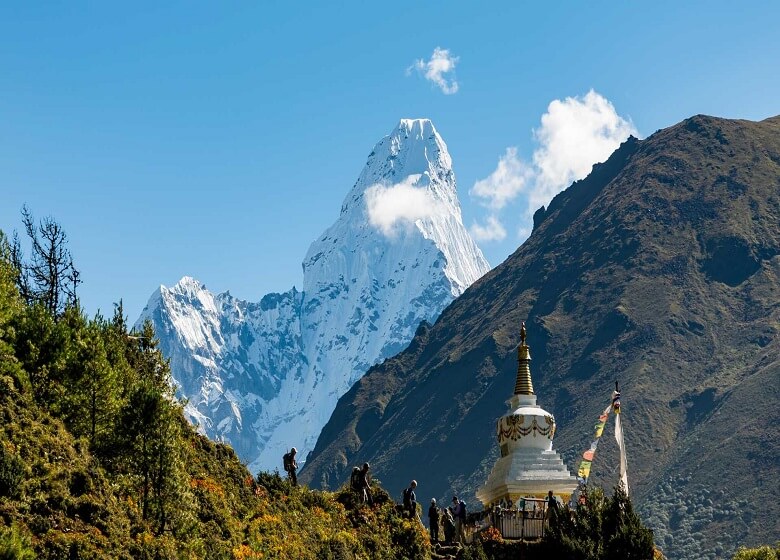
Beyond Namche, the trek continues toward Tengboche, one of the most iconic locations in the Khumbu region. The Tengboche Monastery sits on a ridge with panoramic views of Everest, Lhotse, and Ama Dablam. The mountain appears closer and more imposing from this point onward, and its elegant structure becomes a defining feature of the journey. Attending a prayer ceremony at the monastery adds a meaningful cultural dimension to the experience.
From Tengboche, the trail descends through forests before climbing again toward Pangboche, one of the oldest Sherpa villages in the region. Here, the route to Ama Dablam Base Camp diverges from the main Everest Base Camp trail. The shift is noticeable. The number of trekkers drops significantly, and the environment feels more remote and serene. The path becomes narrower, winding through alpine meadows and open landscapes with uninterrupted views of the surrounding peaks.
The approach to Ama Dablam Base Camp is gradual but steady. As you ascend, the tree line fades, replaced by rocky terrain and high-altitude vegetation. The sense of scale becomes more pronounced, with towering mountains rising sharply above you. Unlike the Everest Base Camp trek, where the destination itself lacks a clear view of Everest, Ama Dablam Base Camp places you directly beneath the mountain, offering a dramatic and intimate perspective.
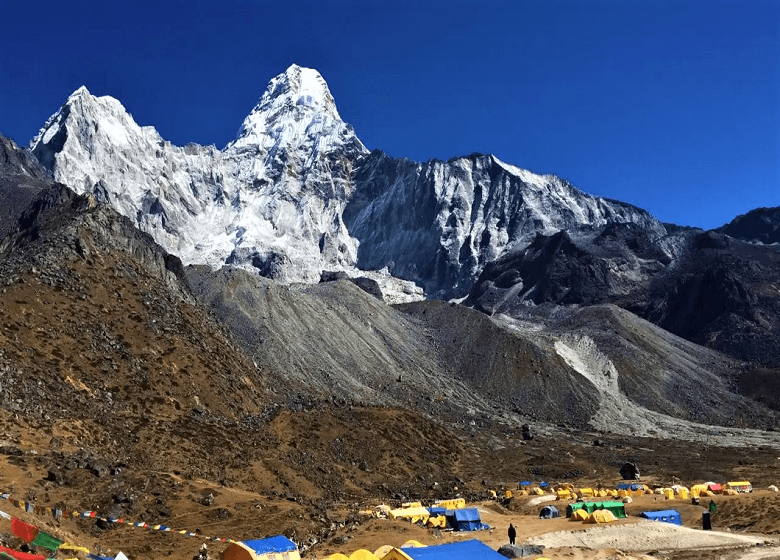
Reaching the base camp, typically situated at around 4,600 meters, is a highlight that feels both rewarding and peaceful. The campsite sits in a wide, open valley surrounded by snow-capped peaks and glacial features. Ama Dablam looms overhead, its steep faces and hanging glaciers clearly visible. During climbing season, you may see expedition tents and climbers preparing for their ascent, adding a sense of activity to an otherwise quiet environment.
One of the defining aspects of this trek is its balance between accessibility and solitude. While it is less crowded than the Everest Base Camp route, it still benefits from well-established trails and teahouse accommodations. This makes it suitable for trekkers who want a more tranquil experience without sacrificing comfort or safety. The duration is also shorter, usually around 10 to 14 days, making it a great option for those with limited time.
Culturally, the trek offers rich insights into Sherpa life and Tibetan Buddhist traditions. Villages like Namche and Pangboche are dotted with monasteries, chortens, and prayer flags that reflect the spiritual heritage of the region. Interactions with locals, whether in teahouses or along the trail, provide a deeper understanding of how communities live and thrive in such a challenging environment.
The natural diversity along the route adds another layer to the experience. Lower sections are filled with pine and rhododendron forests, which burst into color during the spring months. As you climb higher, the vegetation becomes sparse, and the terrain takes on a more rugged, alpine character. Wildlife such as Himalayan tahr, musk deer, and various bird species can sometimes be spotted, especially in quieter sections of the trail.
In terms of difficulty, the Ama Dablam Base Camp Trek is considered moderate. It does not reach the extreme altitudes of Everest Base Camp or Kala Patthar, but altitude is still a factor and should not be underestimated. Proper acclimatization, a steady pace, and good hydration are essential. The trail includes both ascents and descents, with some steep sections, but it is generally manageable for trekkers with a reasonable level of fitness.
Weather conditions play an important role in shaping the experience. The best seasons for the trek are spring and autumn, when skies are clear and temperatures are relatively stable. During these months, visibility is excellent, allowing for uninterrupted views of Ama Dablam and the surrounding peaks. Winter treks are possible but can be cold, while the monsoon season brings rain and clouds that may obscure the scenery.
Another appealing aspect of this trek is the flexibility it offers. Some trekkers choose to combine it with Everest Base Camp or Gokyo Lakes, creating a longer and more comprehensive Himalayan journey. Others prefer to focus solely on Ama Dablam Base Camp, enjoying the quieter trails and more relaxed pace. Either way, the trek can be tailored to suit different interests and timeframes.
The return journey typically retraces the same path back to Lukla, offering a chance to revisit familiar villages and viewpoints from a different perspective. Descending allows more time to appreciate details that may have been missed on the way up, from small shrines to distant peaks that reveal themselves more clearly in changing light.
Ultimately, the Ama Dablam Base Camp Trek is about experiencing the Himalayas in a way that feels both personal and profound. It combines stunning natural beauty, cultural richness, and a sense of calm that is often hard to find on busier routes. Standing at the base of Ama Dablam, surrounded by silence and towering peaks, is a moment that captures the essence of why people come to the mountains in the first place. It is not just about reaching a destination, but about the journey, the perspective, and the lasting impression it leaves behind.
Trip Highlights
- Close-up views of Ama Dablam
- Scenic flight to Lukla
- Namche Bazaar experience
- Tengboche Monastery
- Peaceful trails beyond Pangboche
- Authentic Sherpa culture
- Ama Dablam Base Camp (4,600 m)
- Diverse landscapes
- Stunning Himalayan panoramas
- Less crowded alternative to Everest Base Camp


