

Trip Info
-
Bus, Airline
-
3 Star hotel
-
Kathmandu
-
Feb-May
-
Eco-tour
-
All meal during trek
-
English, Spanish, Chinese
-
Easy to moderate
-
2-15
-
15
-
65
The Luri Gompa Trek is a lesser-known yet culturally profound trekking experience in Nepal’s remote Upper Mustang region. Unlike the more frequented trails leading to Lo Manthang, this trek takes you deep into the hidden valleys of Mustang, where ancient cave monasteries, dramatic desert landscapes, and preserved Tibetan traditions come together in a truly unique way. At the heart of the journey lies Luri Gompa, a centuries-old cave monastery carved into a cliff face, revered for its spiritual significance and remarkable wall paintings.
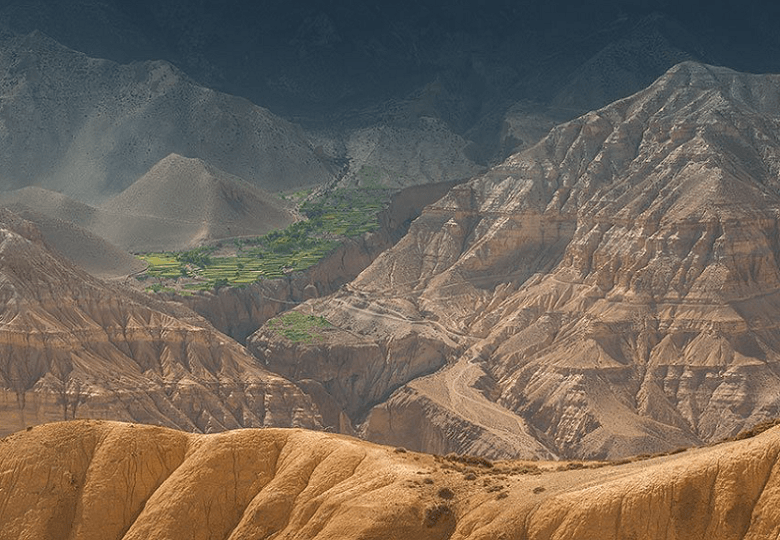
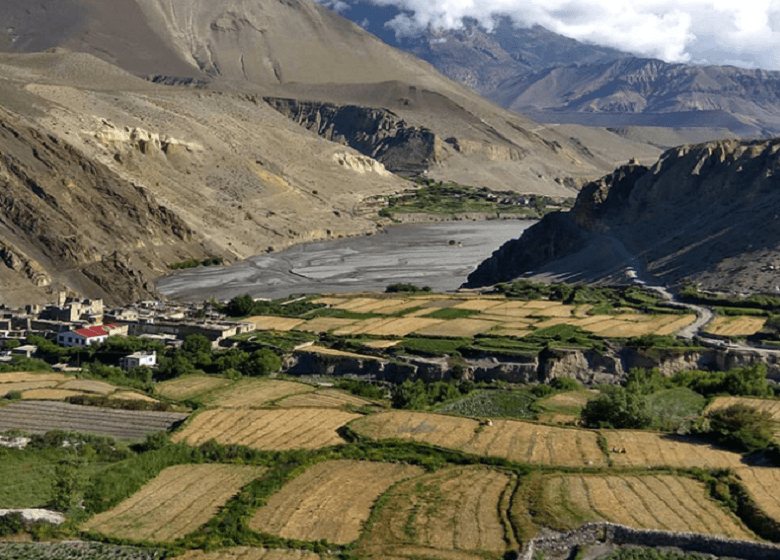
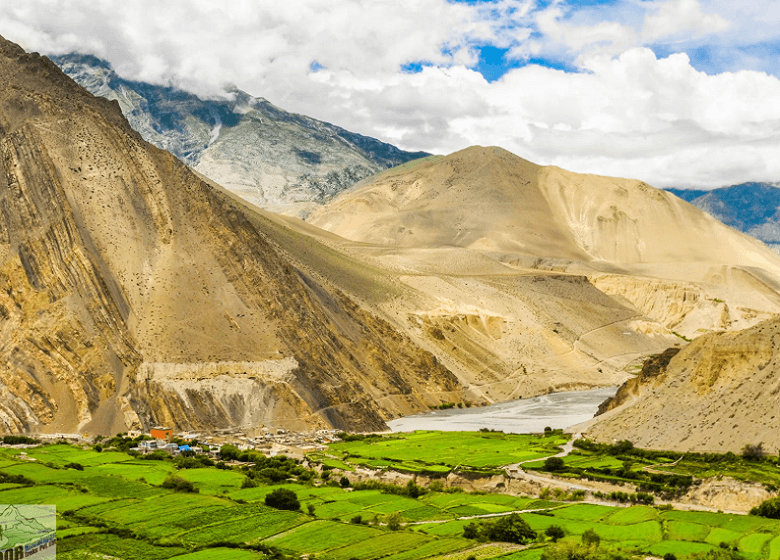
The trek begins in the familiar gateway town of Jomsom, which can be reached either by a scenic flight from Pokhara or by an overland journey through rugged mountain roads. From Jomsom, the trail follows the Kali Gandaki River northward, gradually leaving behind the busier sections of Lower Mustang and entering quieter, more remote terrain. As you move further into the region, the landscape begins to transform. Green patches of farmland give way to barren hills, wind-sculpted cliffs, and wide, open valleys that reflect Mustang’s position in the rain shadow of the Himalayas.
One of the defining features of the Luri Gompa Trek is its sense of isolation. While Upper Mustang itself is known for being less crowded than other trekking regions, the route to Luri Gompa sees even fewer visitors. This makes the trek especially appealing to those seeking solitude and a deeper connection with the landscape and culture. The trails often pass through small, traditional villages where life continues much as it has for generations. These settlements, built from stone and mud, are surrounded by fields of barley and buckwheat, sustained by carefully managed irrigation systems in an otherwise dry environment.
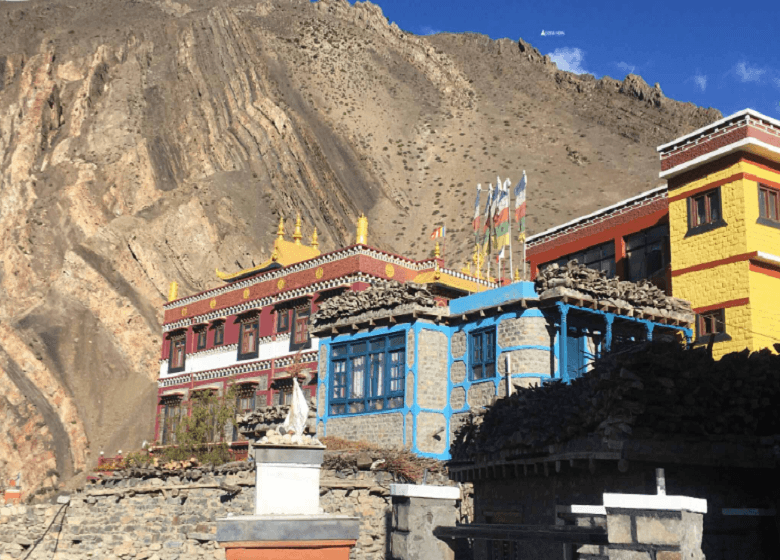
The cultural richness of the trek is closely tied to its Tibetan Buddhist heritage. Mustang was once an independent kingdom with strong ties to Tibet, and that influence remains deeply embedded in the region’s identity. Along the trail, trekkers encounter mani walls, chortens, prayer wheels, and monasteries that serve as both spiritual centers and community hubs. The local people, primarily of Tibetan descent, maintain traditions, language, and customs that have been preserved for centuries. Their warm hospitality adds a personal dimension to the journey, offering glimpses into daily life in this high-altitude desert.
As the trek progresses, the terrain becomes increasingly dramatic. Narrow trails wind along cliffs, descend into deep gorges, and cross high ridges that offer sweeping views of the surrounding mountains and valleys. The colors of the landscape shift throughout the day, from soft beige and gray tones in the morning to vibrant reds and oranges under the afternoon sun. The stark beauty of Mustang is unlike any other region in Nepal, often described as resembling the Tibetan plateau or even a desert canyon system.
Reaching Luri Gompa is the highlight of the trek and a moment that leaves a lasting impression. The monastery is built inside a cave high on a cliff, requiring a short but steep climb to access. Inside, visitors are greeted by ancient murals, statues, and relics that date back to the 13th or 14th century. The artwork, though weathered by time, retains a sense of vibrancy and spiritual depth. The gompa is still used by monks for meditation and rituals, and the atmosphere inside is quiet, sacred, and deeply moving. It is a place that feels untouched by modernity, offering a rare opportunity to connect with centuries-old spiritual practices.
Beyond Luri Gompa, the trek often includes visits to other remote villages and cultural sites, depending on the chosen route. Some itineraries pass through places like Yara and Ghara, which are known for their proximity to cave complexes and unique geological formations. These areas are dotted with sky caves carved into cliffs, some of which were used as dwellings, burial sites, or meditation chambers in ancient times. Exploring these caves provides insight into the ingenuity and spiritual life of the region’s early inhabitants.
The physical demands of the Luri Gompa Trek are moderate, but the remoteness and altitude require careful preparation. The trek typically ranges between 10 to 14 days, with altitudes reaching around 3,800 to 4,000 meters. While the trails are not अत्यधिक technical, they can be rugged and exposed in places. Proper acclimatization is essential to avoid altitude-related issues, and trekkers should be prepared for basic living conditions. Accommodation is usually in simple tea houses or local homes, where facilities are limited but the experience is authentic and rewarding.
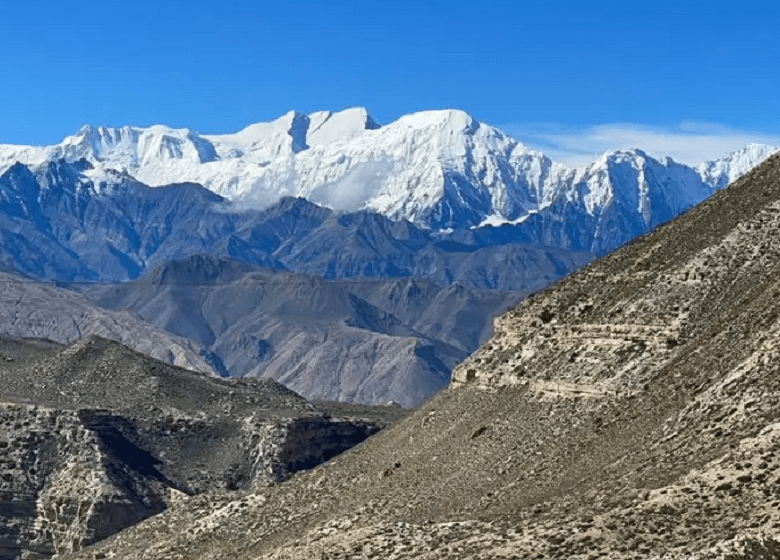
Weather conditions in Mustang are generally dry, making it one of the few trekking regions in Nepal that can be visited even during the monsoon season. The best times for the Luri Gompa Trek are spring (March to May) and autumn (September to November), when the skies are clear and temperatures are moderate. During these periods, the views of the surrounding peaks, including Nilgiri and Dhaulagiri, are particularly striking against the barren landscape.
Logistically, the trek requires special permits, as it lies within the restricted area of Upper Mustang. Trekkers must travel with a licensed guide and obtain the necessary documentation in advance. While this adds to the cost, it also helps preserve the cultural and environmental integrity of the region. Guides play an important role not only in navigation but also in interpreting the cultural and historical significance of the sites visited along the way.
One of the most rewarding aspects of the Luri Gompa Trek is the sense of discovery it offers. Unlike more popular routes where infrastructure and crowds are common, this trek feels exploratory. Each village, monastery, and landscape reveals something new, whether it’s a hidden cave, a centuries-old mural, or a quiet moment shared with locals. The journey encourages a slower pace, allowing trekkers to fully absorb the surroundings and appreciate the subtle details that make Mustang so special.
Trip Highlights
- Visit the ancient Luri Gompa, a sacred cave monastery carved into a cliff
- Explore remote and untouched valleys of Upper Mustang away from main trekking routes
- Experience strong Tibetan Buddhist culture, traditions, and lifestyle
- Discover centuries-old cave systems used for meditation, burial, and shelter
- Enjoy dramatic desert landscapes with colorful cliffs, canyons, and rock formations
- Trek through traditional villages like Yara and Ghara with authentic local life
- Experience a quieter and less crowded alternative to popular Mustang routes
- Witness ancient murals, statues, and spiritual relics inside monasteries
- Enjoy panoramic views of Nilgiri, Dhaulagiri, and surrounding Himalayan ranges
- Travel through a rain-shadow region, making it suitable even during monsoon season


