

Trip Info
-
Bus, Airline
-
3 Star hotel
-
Kathmandu
-
Feb-May
-
Eco-tour
-
All meal during trek
-
English, Spanish, Chinese
-
Easy to moderate
-
2-15
-
15
-
69
The Kanchenjunga North Base Camp Trek is one of Nepal’s most remote and rewarding trekking adventures, offering an unspoiled journey into the eastern Himalayas. Centered around Mount Kanchenjunga, the third-highest peak in the world at 8,586 meters, this trek leads to the North Base Camp, also known as Pangpema, located at حوالي 5,140 meters. Unlike the more commercial trekking regions of Everest and Annapurna, Kanchenjunga remains relatively untouched, providing a true wilderness experience defined by pristine landscapes, rich biodiversity, and strong cultural authenticity.
The journey typically begins with a flight from Kathmandu to Bhadrapur in eastern Nepal, followed by a long but scenic drive to Taplejung, the starting point of the trek. From here, trekkers gradually ascend through a variety of landscapes, beginning with subtropical forests, terraced farmland, and traditional hillside villages. The lower sections of the trek are lush and green, with rivers, waterfalls, and dense vegetation creating a vibrant environment. As the trail climbs higher, the scenery transitions into alpine meadows, glacial valleys, and rugged high-altitude terrain.
One of the most remarkable aspects of the Kanchenjunga North Base Camp Trek is its diversity. The route passes through the Kanchenjunga Conservation Area, which is home to a wide range of plant and animal life. Trekkers may encounter rhododendron forests in bloom during spring, along with rare wildlife such as red pandas, snow leopards, Himalayan black bears, and musk deer, although sightings are not guaranteed. Birdlife is also abundant, making the region appealing for nature enthusiasts.
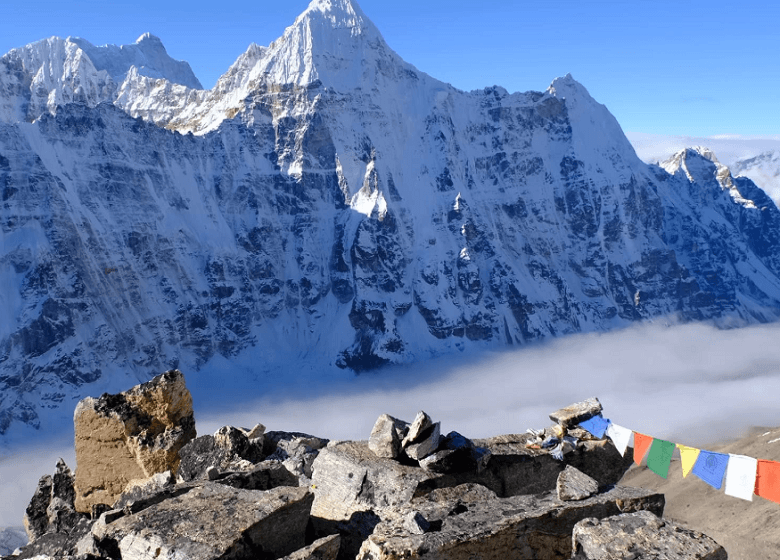
Culturally, the trek is equally enriching. The lower regions are inhabited by communities such as the Limbu and Rai people, whose traditions and lifestyle reflect a blend of indigenous and regional influences. As the trek progresses into higher elevations, Tibetan Buddhist culture becomes more prominent, particularly in villages like Ghunsa. Here, trekkers can observe monasteries, prayer flags, and stone walls carved with prayers, as well as interact with locals who maintain a way of life closely connected to the mountains.
The trail to Kanchenjunga North Base Camp follows the Ghunsa Valley, a spectacular route shaped by glacial rivers and surrounded by towering peaks. Villages such as Sekathum, Amjilosa, Gyabla, and Ghunsa serve as important rest points for acclimatization. Ghunsa, located at around 3,400 meters, is a key stop along the route and offers relatively comfortable tea house accommodation. Trekkers often spend an extra day here to adjust to the altitude before continuing further.
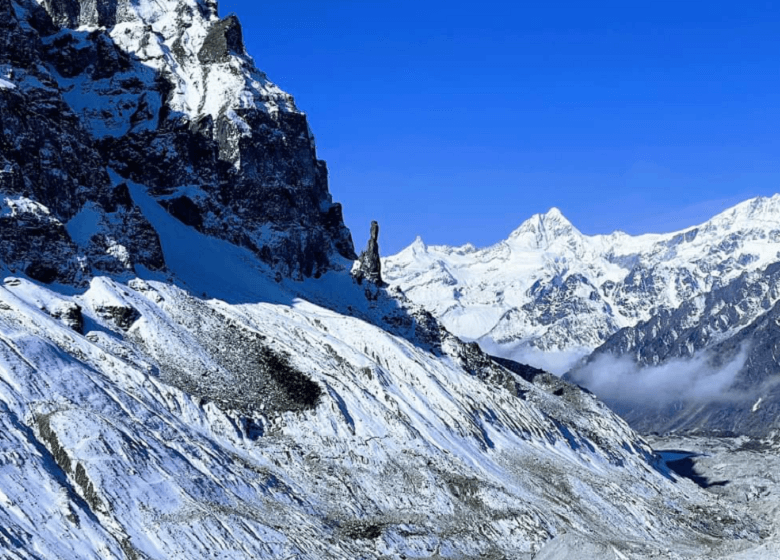
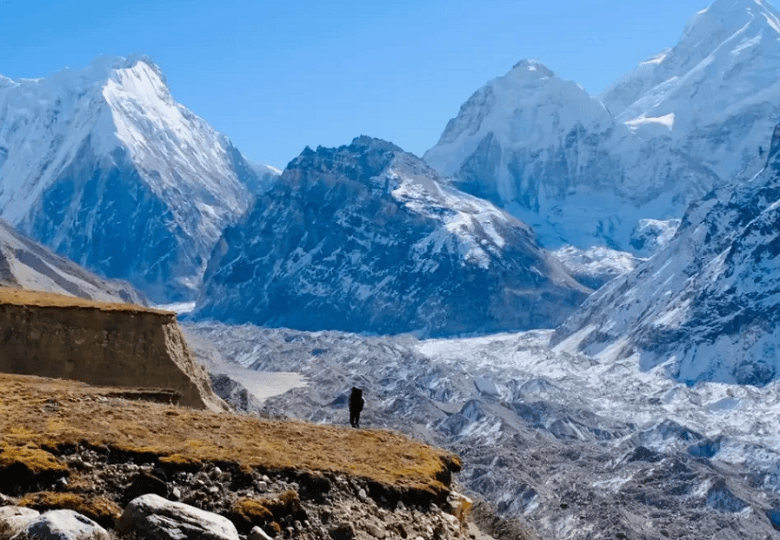
Beyond Ghunsa, the landscape becomes more dramatic and remote. The trail climbs steadily through pine and juniper forests before opening into wide alpine valleys with breathtaking views of snow-covered peaks. As trekkers move toward Kambachen and Lhonak, the terrain becomes more rugged, with rocky paths, glacial features, and cold, windy conditions. The sense of isolation increases, as fewer trekkers venture into this region compared to more popular routes in Nepal.
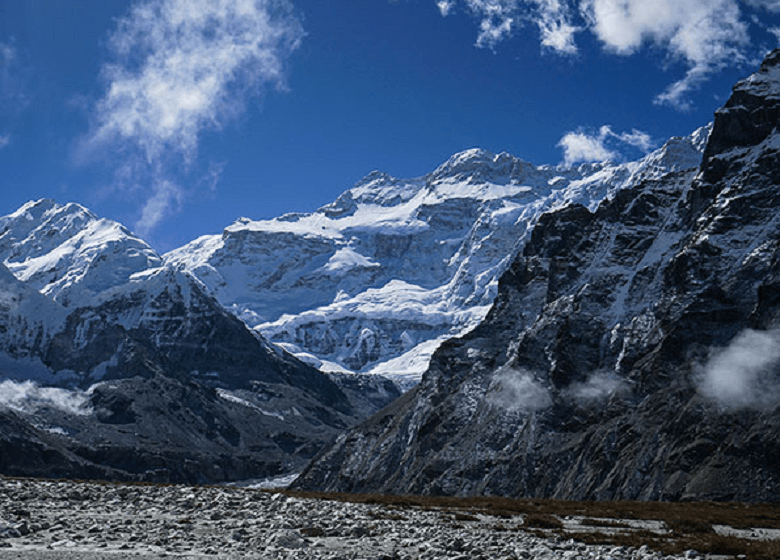
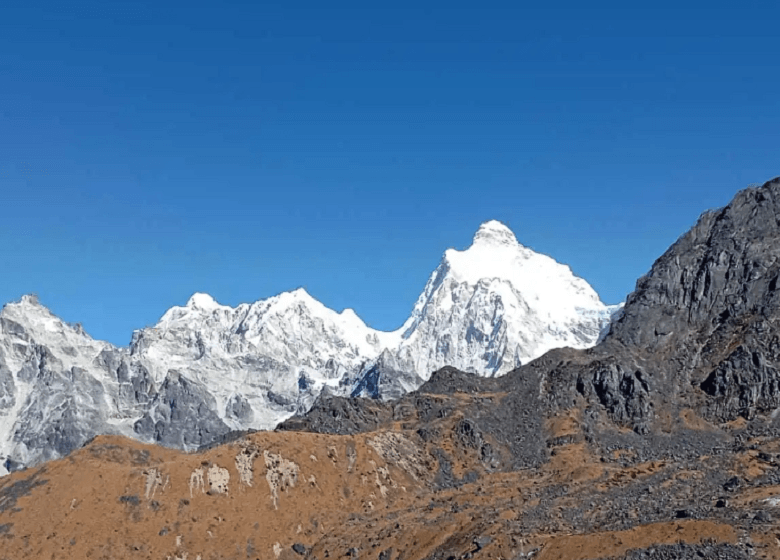
Reaching Pangpema, the North Base Camp of Kanchenjunga, is the highlight of the trek. From this viewpoint, trekkers are rewarded with stunning panoramic views of Kanchenjunga’s massive north face, along with surrounding peaks such as Jannu and Chang Himal. The scale and beauty of the mountains are striking, and the sense of achievement upon reaching this remote destination is deeply satisfying. The base camp area is usually visited as a day hike from Lhonak, allowing time to explore before returning.
The trek is considered challenging due to its long duration, remote setting, and high altitude. It typically takes around 18 to 22 days to complete, depending on the route and pace. Trails can be steep and physically demanding, and weather conditions may vary, especially at higher elevations. Proper acclimatization is essential, and trekkers should be prepared for basic facilities in more remote areas.
Accommodation along the route is mainly in tea houses, though they are simpler than those found in more developed trekking regions. Rooms are basic, and services such as hot showers and electricity may be limited or available at extra cost. Meals generally include simple and nourishing food such as rice, lentils, noodles, soups, and bread. Despite the simplicity, the hospitality of the local people makes the stay comfortable.
One of the defining features of this trek is its remoteness. The limited number of visitors and minimal infrastructure create a sense of solitude that is increasingly rare in the Himalayas. This also means that careful planning is required. The region is restricted, so special permits and a licensed guide are necessary. Trekkers usually travel in small groups with support from guides and porters.
The best time to undertake the Kanchenjunga North Base Camp Trek is during spring (March to May) and autumn (September to November). Spring offers blooming forests and mild temperatures, while autumn provides clear skies and excellent mountain views. Winter trekking is possible but more difficult due to snow and cold temperatures, while the monsoon season brings heavy rain in lower areas.
Beyond the scenery and physical challenge, the trek offers a deep sense of connection to nature and culture. The gradual journey through changing landscapes, the interaction with local communities, and the quiet atmosphere of remote mountain environments create a meaningful and immersive experience.
Trip Highlights
- Trek to Pangpema (5,140 m), the remote North Base Camp of Mount Kanchenjunga
- Enjoy close-up views of Kanchenjunga, the third-highest mountain in the world
- Experience one of Nepal’s most remote and least crowded trekking routes
- Walk through diverse landscapes from subtropical forests to alpine glaciers
- Explore the pristine Kanchenjunga Conservation Area rich in flora and fauna
- Spot rare wildlife such as red panda, snow leopard, and Himalayan black bear (rare sightings)
- Visit traditional villages like Ghunsa and experience local mountain culture
- Follow the scenic Ghunsa Valley surrounded by towering Himalayan peaks
- Witness dramatic glaciers, moraines, and high-altitude terrain near base camp
- Enjoy a true wilderness adventure with raw natural beauty and minimal commercialization


