

Trip Info
-
Bus, Airline
-
3 Star hotel
-
Kathmandu
-
Feb-May
-
Eco-tour
-
All meal during trek
-
English, Spanish, Chinese
-
Easy to moderate
-
2-15
-
15
-
65
The Upper Dolpo Trek is widely regarded as one of Nepal’s most remote, culturally rich, and adventurous trekking experiences. Situated in the far-western region of Nepal, bordering Tibet, Upper Dolpo is part of the trans-Himalayan landscape characterized by arid high-altitude deserts, rugged mountains, and sacred Buddhist villages. Often referred to as “Little Tibet,” this region has maintained its traditional way of life for centuries, largely untouched by outside influence. The trek offers a rare opportunity to experience a combination of extreme natural beauty, ancient Tibetan Buddhist culture, and isolation that is almost unparalleled in the Himalayan region.
The journey typically begins with a flight from Kathmandu to either Nepalgunj or Pokhara, followed by a short domestic flight to Juphal, the gateway to Upper Dolpo. The flight itself is an adventure, as it offers spectacular aerial views of the Annapurna, Dhaulagiri, and Mustang regions while skimming the high ridges and deep valleys of western Nepal. Upon arrival in Juphal, trekkers start the trail through the lower Dolpo region, gradually moving from dense forests to open highlands, and eventually entering the arid landscapes of the upper region. The early sections of the trek allow trekkers to adjust to altitude while experiencing the lush Himalayan foothills and remote villages along the way.
One of the most striking features of Upper Dolpo is its high-altitude desert landscape, which contrasts sharply with the green valleys of central Nepal. As trekkers ascend, the vegetation becomes sparse, and the environment is dominated by rugged cliffs, dry riverbeds, and wide-open plains. This stark beauty is home to unique wildlife, including Himalayan blue sheep (bharal), snow leopards, Himalayan wolves, and various high-altitude bird species. The sense of isolation in these landscapes adds to the allure, giving trekkers a profound feeling of wilderness and solitude.
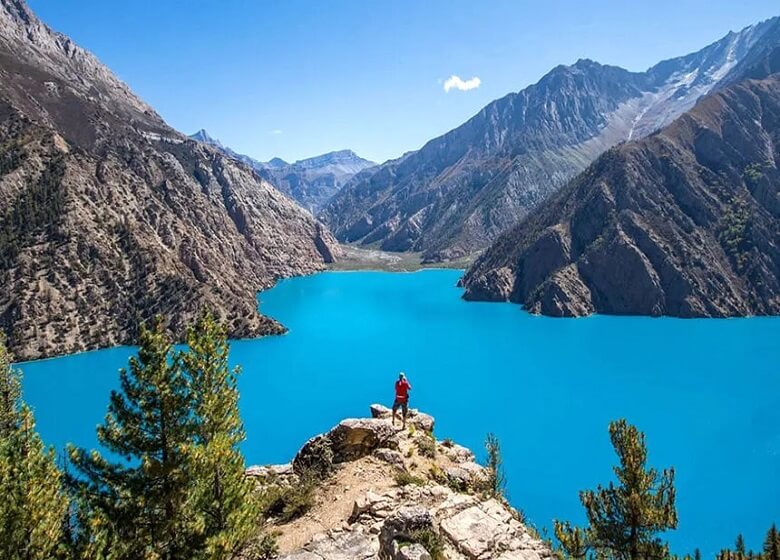
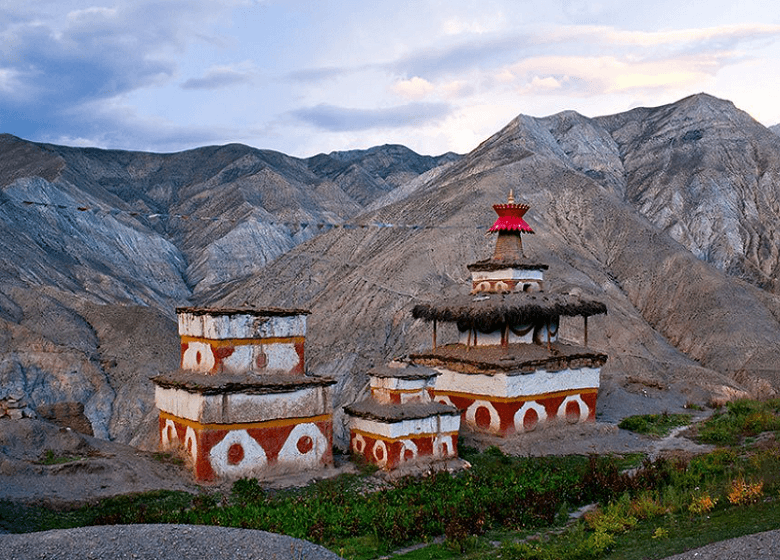
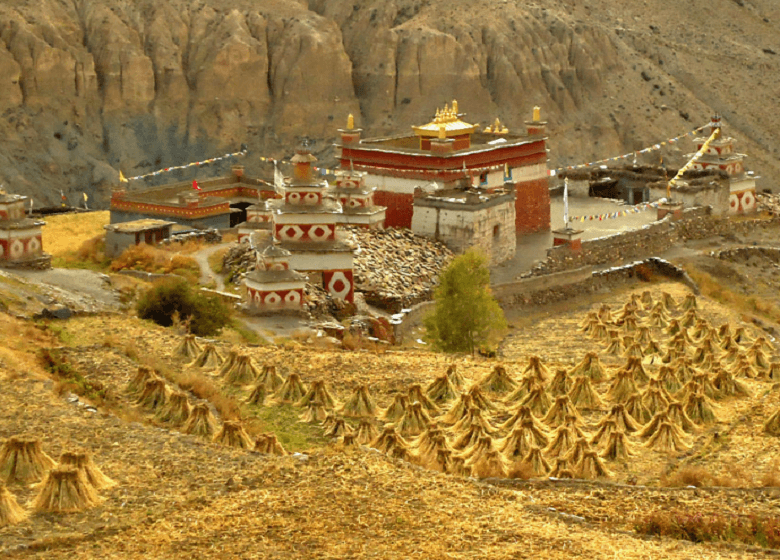
Culturally, Upper Dolpo is remarkable for its preservation of Tibetan Buddhist traditions. The region was largely inaccessible until the early 1990s, which helped maintain its spiritual and cultural integrity. The people of Dolpo, known as Dolpo-pa, follow ancient Buddhist practices, and many villages are centered around monasteries and prayer sites. Trekkers have the opportunity to visit monasteries like Shey Gompa, the oldest and most revered monastery in the region, perched dramatically on a cliff. Another significant site is Phoksundo Lake, a turquoise gem at 3,600 meters, considered sacred and believed to be inhabited by mystical beings. Its waters are serene, reflecting the surrounding mountains, and it is home to a unique species of fish found only in this lake.
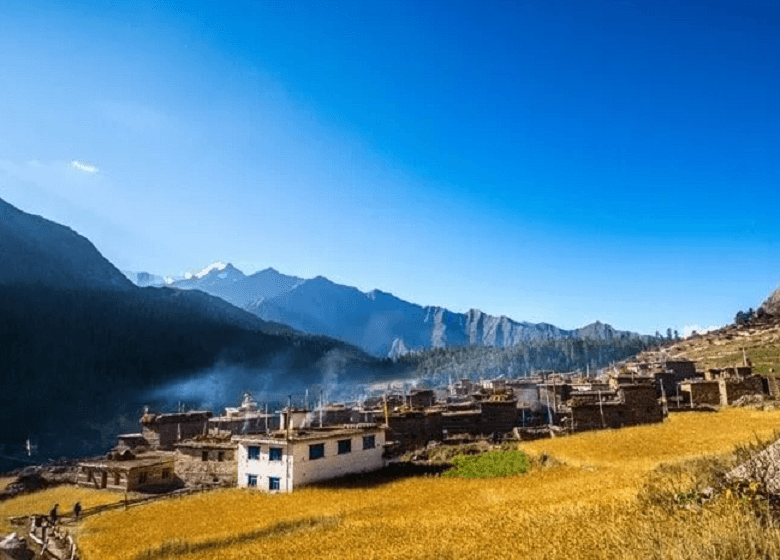
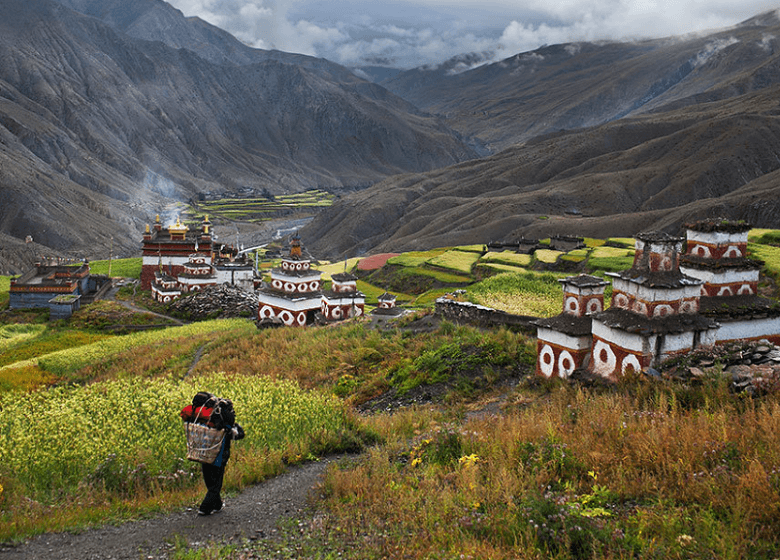
Villages such as Ringmo, Dunai, and Namgung provide insight into traditional Dolpo-pa life. Homes are built from stone and mud, often adorned with prayer flags and manis, while livestock grazing and subsistence farming form the backbone of daily life. Trekkers are often welcomed with warm hospitality, sharing meals and learning about local customs. These interactions offer a rare window into a culture that has remained largely unchanged for centuries, despite global influences creeping into other parts of Nepal.
The Upper Dolpo Trek is not only about cultural immersion but also about physical challenge and high-altitude trekking. Trekkers traverse several high passes, including the Kanji La Pass (5,160 meters), Jhyarkoi La Pass, and the Shin La Pass, each offering breathtaking panoramic views of the Shey Phoksundo National Park and surrounding Himalayan peaks. These passes provide a sense of accomplishment and adventure, as trekkers cross rugged terrain, glaciers, and moraines while navigating steep ascents and descents. Proper acclimatization is critical due to the high altitudes, and most itineraries include rest days at key points to adjust safely.
Phoksundo Lake and the surrounding national park are among the ecological highlights of the trek. The park is home to rare species such as the snow leopard, musk deer, and red panda, as well as numerous migratory birds. The area’s geological formations, including cliffs, canyons, and rock outcrops, add another layer of fascination for nature enthusiasts and photographers. The sheer beauty of the landscape combined with the stillness of the remote highlands makes the experience deeply meditative and spiritually uplifting.
Accommodation along the Upper Dolpo Trek is basic, reflecting the remoteness of the region. Tea houses, lodges, and homestays provide simple but sufficient lodging, with meals consisting of local staples such as tsampa (barley flour), noodles, rice, and dal bhat. In some areas, camping may be necessary, particularly near high passes or remote villages without established lodges. The simplicity of accommodations is offset by the warmth and hospitality of the local people, which becomes a memorable aspect of the journey.
The trek usually takes around 18 to 24 days, depending on the exact route and pace. It is considered one of Nepal’s most challenging treks due to its combination of duration, altitude, and remote terrain. Daily trekking hours range from 5 to 8 hours, often on uneven trails and rocky surfaces. Fitness and prior trekking experience are highly recommended. Trekkers should carry essential gear such as high-quality boots, warm clothing, sleeping bags, and trekking poles to navigate the demanding conditions comfortably.
Permits are required for this restricted region, including the Dolpo Restricted Area Permit and Shey Phoksundo National Park permit. Trekkers must also travel with a licensed guide, as solo trekking is not allowed. These regulations help protect the delicate ecosystem, preserve local culture, and ensure the safety of trekkers. Guided support is invaluable, as it allows trekkers to navigate challenging terrain and gain insights into the history, culture, and spiritual significance of the region.
The best seasons for trekking in Upper Dolpo are spring (March to May) and autumn (September to November). Spring offers pleasant weather and the chance to see wildflowers in the lower valleys, while autumn provides stable skies and clear views of the Himalayan peaks. Winter trekking is possible but comes with extreme cold, heavy snowfall, and the risk of blocked passes, while the monsoon season (June to August) brings rain and landslide risks.
One of the most defining features of the Upper Dolpo Trek is the sense of remoteness and spiritual immersion. Unlike more commercialized treks in Nepal, this journey offers very few crowds and a chance to experience landscapes and cultures largely untouched by tourism. The combination of sacred lakes, ancient monasteries, traditional villages, and rugged mountain passes creates a journey that is both physically challenging and profoundly enriching.
Trip Highlights
- Explore the remote and culturally rich Upper Dolpo region, often called “Little Tibet”
- Visit ancient monasteries including Shey Gompa and other cliffside Buddhist sites
- Cross high passes such as Kanji La Pass (5,160m) and Shin La Pass
- Trek through the pristine Shey Phoksundo National Park with diverse wildlife
- Experience the sacred turquoise Phoksundo Lake and its surrounding landscapes
- Authentic cultural encounters with the Dolpo-pa people in traditional Tibetan-style villages
- Witness stunning high-altitude landscapes, including arid deserts, cliffs, and glaciers
- Opportunity to see rare wildlife like snow leopards, musk deer, and Himalayan birds
- Remote, off-the-beaten-path trekking with minimal crowds
- Combination of spiritual, cultural, and high-altitude adventure in a pristine Himalayan environment


