

Trip Info
-
Bus, Airline
-
3 Star hotel
-
Kathmandu
-
Feb-May
-
Eco-tour
-
All meal during trek
-
English, Spanish, Chinese
-
Easy to moderate
-
2-15
-
15
-
65
The Damodar Kunda Trek is one of the most remote and spiritually significant journeys in Nepal, taking trekkers deep into the hidden corners of Upper Mustang near the Tibetan border. Unlike the more popular trekking routes in the Annapurna region, this trek offers a raw and unfiltered Himalayan experience, combining high-altitude adventure with deep religious importance. Damodar Kunda, a sacred alpine lake complex, sits at an elevation of around 4,890 meters and is revered by both Hindus and Buddhists. The journey to reach it is as meaningful as the destination itself, passing through stark landscapes, ancient villages, and culturally rich Tibetan-influenced communities.
The trek usually begins in Kathmandu, followed by travel to Pokhara and then onward to Jomsom, either by flight or overland journey. Jomsom serves as the gateway to Mustang and marks the transition from the greener lower hills to the dry, windswept terrain of the Trans-Himalayan region. From here, trekkers follow the Kali Gandaki Valley northward, gradually ascending into Upper Mustang. The early part of the trek shares the trail with routes leading to Lo Manthang, allowing trekkers to experience the cultural and historical highlights of the region before heading into more remote territory.
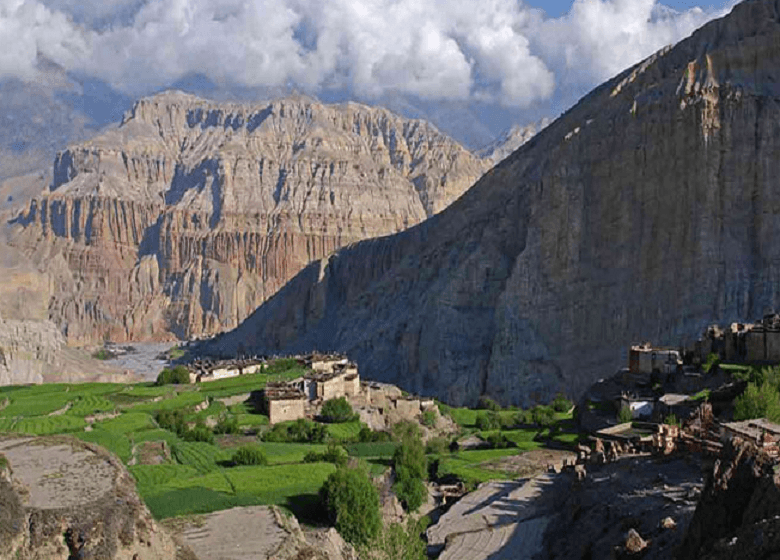
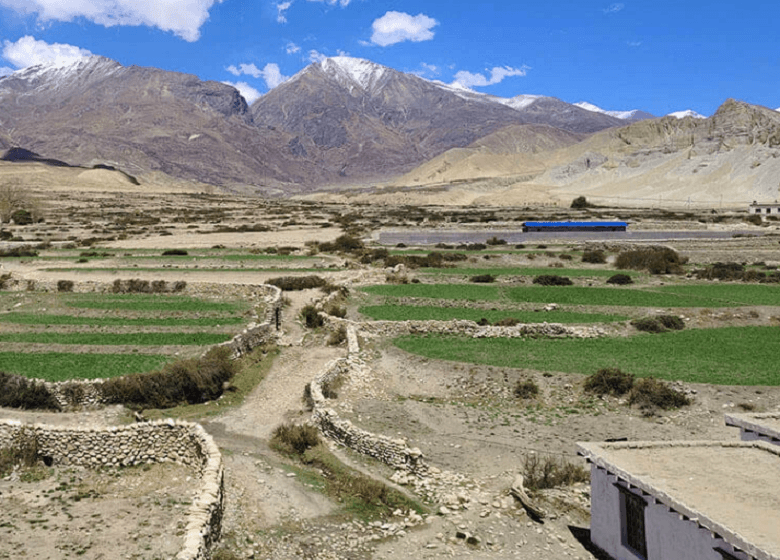
As the journey progresses, the landscape undergoes a dramatic transformation. The lush vegetation of lower elevations gives way to barren hills, deep canyons, and eroded cliffs in shades of red, brown, and ochre. This arid environment exists due to the rain shadow effect created by the Annapurna and Dhaulagiri ranges, which block monsoon clouds from reaching the region. The result is a desert-like terrain that feels more akin to Tibet than to the rest of Nepal. The wide-open valleys, high passes, and wind-carved formations create a sense of vastness and isolation that defines the Damodar Kunda Trek.
One of the key highlights along the route is Lo Manthang, the ancient walled capital of the former Kingdom of Mustang. This culturally rich town offers an opportunity to explore monasteries, royal palaces, and traditional homes that reflect centuries-old Tibetan influence. Lo Manthang also serves as an important acclimatization stop before venturing further into higher and more remote areas. Trekkers often spend an extra day here to rest, explore nearby monasteries, and prepare for the challenging days ahead.
Beyond Lo Manthang, the trail becomes significantly more remote and less traveled. The number of trekkers decreases sharply, and the infrastructure becomes more basic. Camping is often required in this section, as tea houses are limited or nonexistent. The route heads northeast toward the Damodar Himal range, crossing high-altitude passes and traversing vast, empty landscapes where signs of human habitation are rare. This part of the trek demands a higher level of physical fitness, endurance, and mental resilience, as trekkers must cope with altitude, cold temperatures, and limited facilities.
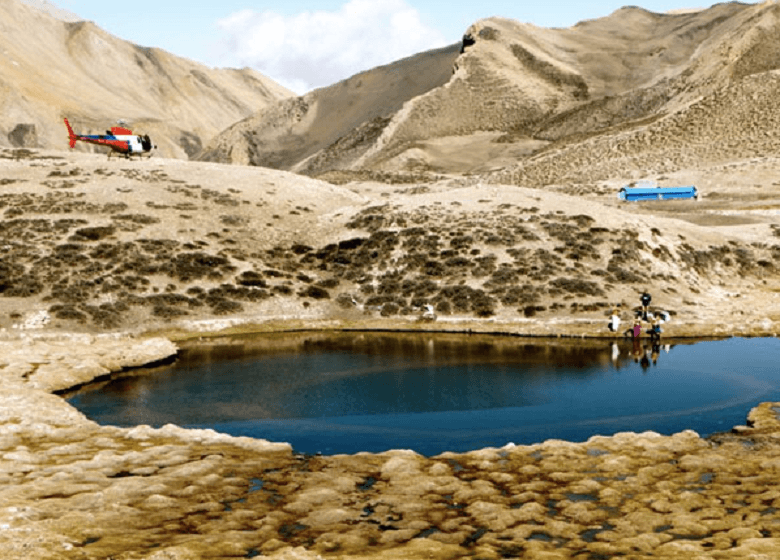
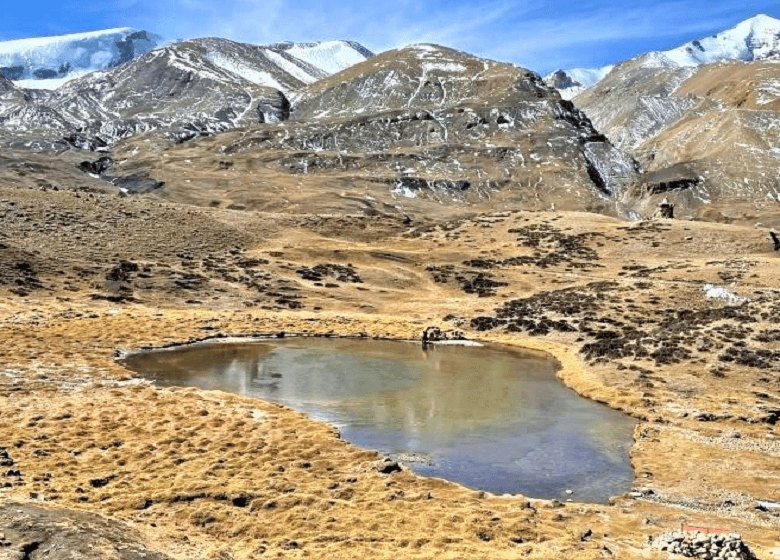
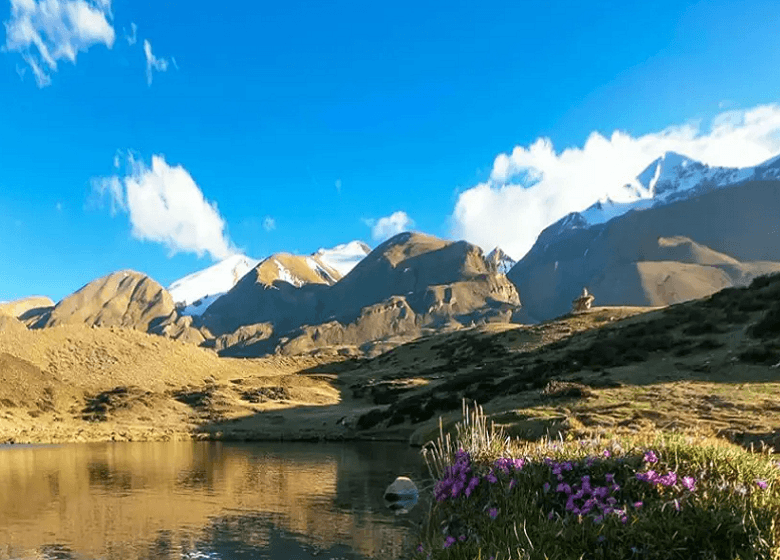
Damodar Kunda itself is a group of high-altitude lakes surrounded by barren hills and snow-capped peaks. The lakes are considered sacred, particularly in Hindu mythology, where they are associated with Lord Vishnu. Pilgrims believe that bathing in the waters of Damodar Kunda can cleanse sins and bring spiritual merit. The site is also important in Buddhist tradition, adding to its spiritual significance. Reaching the lakes is a profound moment for many trekkers, not only because of the physical effort required but also due to the serene and sacred atmosphere of the المكان. The stillness of the water, the crisp mountain air, and the vast silence create a deeply reflective experience.
The cultural dimension of the trek is equally compelling. The Mustang region has strong historical ties to Tibet, and this influence is evident in the language, architecture, and daily life of the स्थानीय people. Villages along the route are characterized by stone houses, flat roofs, and narrow road, often adorned with prayer flags and mani walls. The people of Mustang, primarily of Tibetan descent, maintain a traditional lifestyle centered around agriculture, पशुपालन, and trade. Trekkers have the opportunity to interact with locals, learn about their customs, and witness a way of life that has remained largely unchanged for generations.
Another fascinating aspect of the Damodar Kunda Trek is the presence of ancient caves carved into cliffs throughout the region. These caves, some of which are thousands of years old, were used for various purposes, including meditation, burial, and habitation. Exploring these caves provides insight into the region’s long history and the spiritual practices of its early inhabitants. In some areas, entire cliff faces are dotted with cave openings, creating a scene that is both mysterious and captivating.
The trek is considered challenging due to its high altitude, remote location, and, long duration, which typically ranges from 18 to 24 days depending on the route and pace. Proper acclimatization is essential to avoid altitude sickness, and trekkers must be prepared for basic camping conditions in the higher sections. Weather can be unpredictable, with cold nights and strong winds, especially at higher elevations. Despite these challenges, the trek is immensely rewarding for those who seek adventure beyond the conventional routes.
The best time to undertake the Damodar Kunda Trek is during the spring (April to June) and autumn (September to October) seasons, when weather conditions are relatively stable and skies are clear. Due to its location in the rain shadow, the region can also be trekked during the monsoon months, although logistical challenges may arise. Winter trekking is generally not recommended due to extreme cold and snowfall in high-altitude areas.
Permits are required for this trek, as it lies within the restricted region of Upper Mustang. Trekkers must obtain a special permit and travel with a licensed guide. This regulation helps preserve the cultural and environmental integrity of the area while ensuring the safety of visitors. Given the remoteness of the trek, proper planning and support are crucial, including experienced guides, porters, and adequate supplies.
Trip Highlights
- Visit the sacred Damodar Kunda, a high-altitude lake revered by Hindus and Buddhists
- Trek through the remote and restricted Upper Mustang region near the Tibetan border
- Explore the ancient walled city of Lo Manthang with its monasteries and royal heritage
- Experience dramatic Trans-Himalayan landscapes with barren valleys and colorful cliffs
- Cross high-altitude passes with panoramic views of the Damodar Himal range
- Discover ancient caves carved into cliffs, used for meditation and burial
- Experience authentic Tibetan-influenced culture, traditions, and lifestyle
- Enjoy a true off-the-beaten-path adventure with very few trekkers
- Witness stunning views of Nilgiri, Dhaulagiri, and surrounding Himalayan peaks
- Undertake a spiritually enriching journey combining pilgrimage and high-altitude trekking


